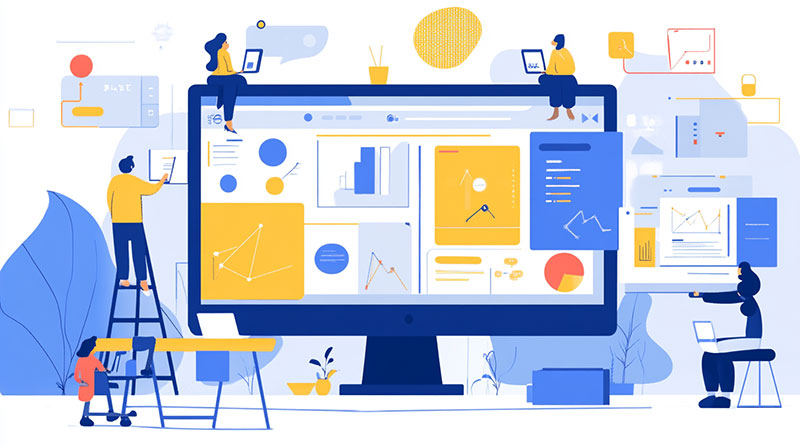
Did you know that 88% of users are less likely to return to a website following a bad experience? User experience (UX) is the digital equivalent of customers walking into your store, making it a key component of your marketing strategy. Even the most beautiful sites can sabotage lead conversion due to a poor UX, directly impacting business success. Prioritizing UX is about making your website functional, convenient, efficient, and enjoyable for users. With that in mind, this article examines four UX issues your site may have and how to fix them.
1. Slow Load Times
Statistics show that 47% of users do not wait more than two seconds for a website to load. Slow website times are a cancer to smooth UX, leading to frustration and decreased engagement. A site with slow load times will have higher bounce rates, as people will often bounce before engaging. Consequently, there will be a drop-off at the top of the funnel. As such, fixing slow load times is critical. Here is how:
- Optimize images: Use tools like TinyPNG or WebP format to compress and resize images without compromising quality.
- Use lazy loading: Load images and content as users move down the page to speed up the process and save bandwidth.
- Leverage browser caching: Store static files in the user’s browser to reduce downloading time for repeat visits.
2. Weak Mobile Experience
A considerable proportion of web traffic consists of mobile users. A website not optimized for mobile views will drive away these visitors and damage brand reputation. Issues such as difficult navigation, non-responsive designs, or poor mobile readability can also negatively impact your search engine rankings.
In contrast, prioritizing mobile optimization will lead to lower bounce rates and increased conversion rates. Additionally, this can increase your user engagement, search engine rankings, and revenue opportunities. Some tips to fix a poor mobile experience include:
- Using CSS media queries and flexible grids so your layout adapts to different screen sizes
- Testing on multiple devices
- Using legible font sizes and making buttons large enough to tap easily.
If you are looking for a long-term, effective solution to your UX issues, consider hiring a Web Agency. These professionals develop and design your website expertly to increase conversions and improve UX. As a result, you can increase engagement and build loyal customers that will last you long.
3. Information Overload
Websites with too many pages, articles, images, or videos can confuse users. Cluttered layouts, lack of informational hierarchy, and poor use of white space lead to cognitive overload. As a result, users get overwhelmed and abandon mid-funnel. In this case, try these three fixes:
- Use progressive disclosure: Show only the essential information upfront, then reveal more as the user expresses interest or scrolls down.
- Embrace minimalism: Keep your layouts clean and focus on a few key actions and messages per page.
- Tailor content: Show users content based on their funnel stage. Evaluate whether the user is in the awareness, consideration, or conversion stage of their journey. Then, prioritize content to match it.
4. Lack of a Clear User Journey
A user journey refers to how users navigate the page. A user without a clear path will wander or, potentially, leave. These individuals may form a negative impression of your brand and may not visit again. Two of the signs of an undefined user journey are a lack of clear calls to action (CTAs) and inconsistent design. Here is how to fix them:
Improper CTA placement:
- Make CTAs visible by placing them above the fold.
- Use action-oriented, benefit-driven language.
- Match CTA to user intent and funnel stage.
Inconsistent design:
- Stick to a consistent visual message. Maintain uniform spacing, icons, and tone.
- Establish and follow a set of design guidelines on color, typography, and buttons.
Endnote
UX is a critical part of your website’s ability to attract and convert visitors. The good news is that the mistakes here are fixable if you apply user-focused design practices. Follow the tips above to improve your user satisfaction and conversion rates in today’s competitive business landscape.

Renowned for his expertise in logo design and visual branding, Bogdan has developed a multitude of logos for various clients.
His skills extend to creating posters, vector illustrations, business cards, and brochures. Additionally, Bogdan's UI kits were featured on marketplaces like Visual Hierarchy and UI8.
He also wrote in the past years on sites like Design Your Way, WebDesignerDepot, WPDean, Designmodo, Speckyboy, Slider Revolution, and more.
- The Windsurf Logo History, Colors, Font, And Meaning - 10 October 2026
- How to Remove Background From Product Photos (No Photoshop) - 10 October 2026
- How Designers can Build a Stronger Online Creative Identity - 9 October 2026

Bogdan Sandu is a seasoned designer who has been designing websites since 2008. Renowned for his expertise in logo design and visual branding, Bogdan has developed a multitude of logos for various clients. His skills extend to creating posters, vector illustrations, business cards, and brochures. Additionally, Bogdan's UI kits were featured on marketplaces like Visual Hierarchy and UI8. He also wrote in the past years on sites like Design Your Way, WebDesignerDepot, WPDean, Designmodo, Speckyboy, Slider Revolution, and more.
You Might Also Like