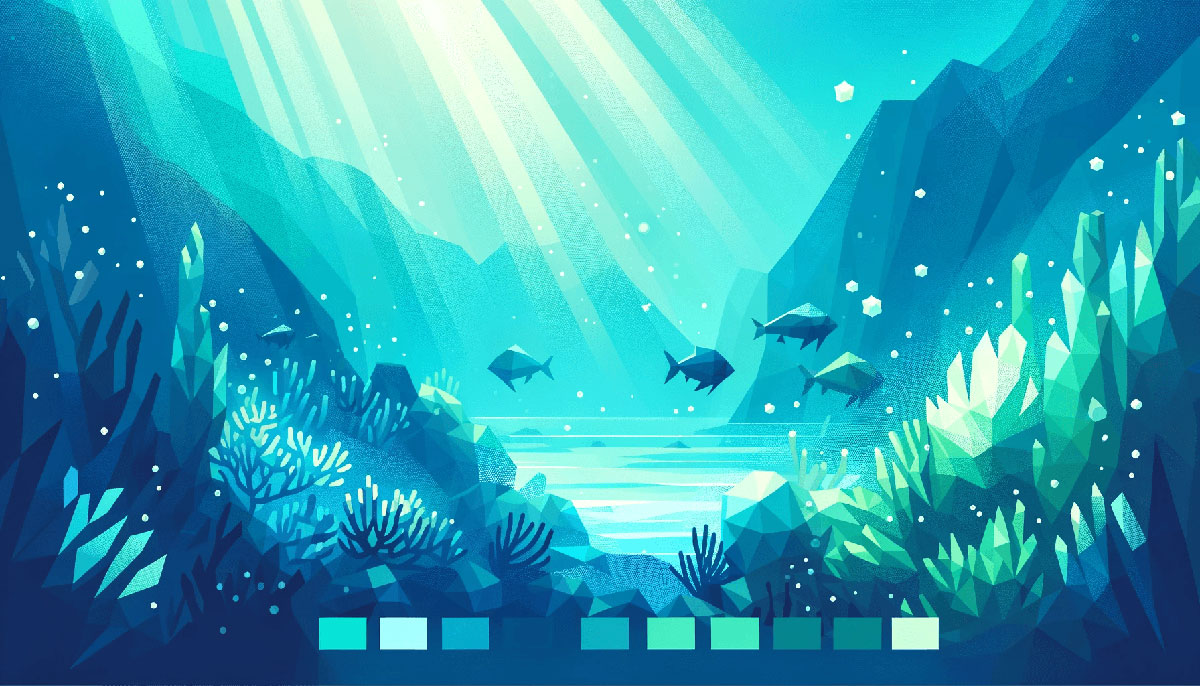
Turquoise sits between blue and green on the color wheel, pulling the calm of ocean depths and the energy of tropical shallows into one shade. It’s tricky to pair well.
Turquoise color palettes solve that problem by giving you proven combinations that actually work, whether you’re designing a wellness app, branding a beach resort, or choosing paint for your living room.
This guide covers 15 tested palettes with hex codes, pairing strategies, and real-world use cases. You’ll learn which combinations create trust, which spark energy, and how to avoid clashing your aqua tones with the wrong accent colors.
From coastal pastels to neon fusions, each palette includes mood breakdowns and specific applications so you can pick the right turquoise scheme fast.
Turquoise Color Palettes
Coastal Breeze
| #40E0D0 | #F7F0F0 | #A09A9D | #484349 | #17A09E |
What It Is
Clean aqua tones paired with soft grays create breathing room in layouts.
Works as a primary UI color with generous white space for readability.
Color Codes
Base turquoise (#40E0D0) anchors the palette with near-white snow (#F7F0F0) and taupe gray (#A09A9D) for neutral surfaces.
Jet (#484349) handles typography, while Persian green (#17A09E) adds depth.
Best Use Cases
Web design for travel sites, wellness apps, spa branding.
Interior design for coastal homes, Mediterranean-inspired spaces.
Pairing Suggestions
Combine with warm color palettes like coral (#FF8559) or terracotta for energy.
Layer with cool color palettes using navy or charcoal for contrast.
Mood & Atmosphere
Sunlit water meeting pale foam sets a relaxed seaside mood.
Spa-like tranquility with modern minimalism, perfect for reducing visual noise.
Tropical Sunset
| #78FCEE | #40E0D0 | #FFA3A2 | #FF9179 | #FF7F50 |
What It Is
Bright cyan shades meet warm coral and salmon for high-energy tropical vibes.
Perfect complementary color scheme balancing cool aqua with warm accents.
Color Codes
Turquoise (#78FCEE) and standard turquoise (#40E0D0) provide cool foundations.
Salmon pink (#FFA3A2), salmon (#FF9179), and coral (#FF7F50) add warmth.
Best Use Cases
Wedding color palettes, beach resort branding, summer campaigns.
Poster design, packaging for tropical products, Instagram feeds.
Pairing Suggestions
Add gold color palettes accents for luxury resort aesthetics.
Mix with cream color palettes for softer applications.
Mood & Atmosphere
Caribbean beach at golden hour, inviting and harmonious.
Cheerful without being childish, warm without losing the refreshing aqua edge.
Ocean Depth
| #66F1C2 | #40E0D0 | #01B3B1 | #069494 | #008080 |
What It Is
Monochromatic turquoise progression from aquamarine to deep teal creates layered depth.
Uses analogous colors within the blue-green spectrum.
Color Codes
Aquamarine (#66F1C2) to turquoise (#40E0D0) to blue-green (#01B3B1) flowing into teal (#069494, #008080).
Each step darkens, maintaining hue consistency while varying lightness.
Best Use Cases
Data visualization with five-tier scales, gradient backgrounds for apps.
Corporate branding for tech, finance, healthcare requiring trust signals.
Pairing Suggestions
Pair with white color palettes for clean tech interfaces.
Combine with gray color palettes for professional applications.
Mood & Atmosphere
Deep ocean gradient, mysterious yet sophisticated.
Calm, trustworthy, ideal for financial dashboards or medical apps.
Mediterranean Luxe
| #003B3B | #1A837C | #34CBBC | #CCAE35 | #E6C31B |
What It Is
Rich teal tones meet old gold and saffron for upscale elegance.
Dark to bright turquoise creates depth before golden accents add warmth.
Color Codes
Dark cyan (#003B3B) and Caribbean current (#1A837C) ground the palette.
Turquoise (#34CBBC), old gold (#CCAE35), and saffron (#E6C31B) provide luxury highlights.
Best Use Cases
Packaging design for premium products, boutique hotel branding.
Restaurant interiors, high-end fashion lookbooks, jewelry marketing.
Pairing Suggestions
Works with bronze or copper metallic accents.
Layer navy blue for added sophistication.
Mood & Atmosphere
Mediterranean coastline meets Arabian nights, sophisticated and exotic.
Royal affair vibe, perfect for brands targeting affluent audiences.
Spa Serenity
| #B3EEFA | #40E0D0 | #A09A9D | #F7F0F0 | #484349 |
What It Is
Watery turquoise with misty neutrals evokes quiet spa environments.
Subdued gray-lavender tone provides soft contrast without harshness.
Color Codes
Non-photo blue (#B3EEFA) and turquoise (#40E0D0) handle aqua elements.
Taupe gray (#A09A9D), snow (#F7F0F0), and jet (#484349) create neutral foundation.
Best Use Cases
Wellness center logos, yoga studio branding, mindfulness app interfaces.
Beauty product packaging, aromatherapy labels, meditation spaces.
Pairing Suggestions
Add lavender (#D3D3FF) for aromatherapy contexts.
Introduce mint green for botanical wellness brands.
Mood & Atmosphere
Deep exhale, calm water, absolute tranquility.
Minimal layouts with generous white space, matte finishes recommended.
Coral Reef
| #40E0D0 | #FF8559 | #FFB888 | #FFFFFF | #1C655E |
What It Is
Snorkeling over bright coral and darting fish, playful reef colors.
Split-complementary approach with turquoise, coral, and deep teal.
Color Codes
Turquoise (#40E0D0) pairs with coral (#FF8559) and atomic tangerine (#FFB888).
White (#FFFFFF) provides breathing room, Caribbean current (#1C655E) adds depth.
Best Use Cases
Children’s brands, summer color palettes campaigns, beach event posters.
Quick-scrolling social feeds, playful app designs, tropical vacation marketing.
Pairing Suggestions
Works with yellow color palettes for added sunshine energy.
Mix pink color palettes for feminine beach aesthetics.
Mood & Atmosphere
High-energy, youthful, dynamically vibrant.
Best with chunky shapes and high-contrast typography.
Pastel Dream
| #E5C2EB | #B3EEFA | #B7F5E9 | #DDFEAF | #B2FF9E |
What It Is
Gentle whisper of pastel colors spanning purple, blue, green spectrum.
Spring-fresh palette with soft, soothing celeste and mindaro tones.
Color Codes
Thistle (#E5C2EB), non-photo blue (#B3EEFA), and celeste (#B7F5E9) provide cool pastels.
Mindaro (#DDFEAF) and light green (#B2FF9E) add nature’s embrace.
Best Use Cases
Kids color palettes for nurseries, baby product branding, Easter campaigns.
Soft product photography backgrounds, gentle UI themes, springtime marketing.
Pairing Suggestions
Layer with pastel pink for ultra-soft femininity.
Add pastel yellow for sunny warmth.
Mood & Atmosphere
Soft, uplifting, subtly colorful without overwhelming.
Perfect for creating spaces that feel airy and light with hint of nature.
Turquoise Monochrome
| #B3ECEC | #89ECDA | #43E8D8 | #40E0D0 | #3BD6C6 |
What It Is
Pure monochrome colors progression showing turquoise tints and shades.
Single hue varied by saturation and lightness for cohesive palette.
Color Codes
Light turquoise (#B3ECEC, #89ECDA) flows into bright (#43E8D8, #40E0D0) then saturated (#3BD6C6).
Each step maintains identical hue angle while adjusting value.
Best Use Cases
Brand systems requiring tonal flexibility, UI state indicators, data charts.
Motion graphics transitions, loading animations, progressive disclosure interfaces.
Pairing Suggestions
Needs strong contrast color like charcoal for text.
Works with beige color palettes for warm neutral balance.
Mood & Atmosphere
Crystal-clear waters, cohesive and harmonious.
Professional yet approachable, ideal for consistent brand applications.
Vibrant Reef
| #31F7E9 | #84FFF3 | #00FFD4 | #00EADB | #00D5E1 |
What It Is
Fluorescent cyan leading the charge with ice blue and aquamarine creating energetic vibrancy.
Robin egg blue adds soft touch to otherwise electrifying palette.
Color Codes
Turquoise (#31F7E9), ice blue (#84FFF3), and aquamarine (#00FFD4) provide brightness.
Turquoise variants (#00EADB, #00D5E1) maintain intensity throughout.
Best Use Cases
Gaming color palettes, youth-focused tech brands, energy drink packaging.
Festival posters, nightclub branding, sports apparel for extreme sports.
Pairing Suggestions
Works with neon pink or neon orange for maximum impact.
Add black backgrounds for neon glow effect.
Mood & Atmosphere
Youthful, invigorating, impossible to ignore.
Best for spaces aiming to energize and captivate younger audiences.
Earthy Turquoise
| #896452 | #A98878 | #40E0D0 | #2A8D89 | #133942 |
What It Is
Brown shades like raw umber and beaver ground vibrant turquoise with earthy balance.
Creates stability and warmth while maintaining spirited aqua accents.
Color Codes
Raw umber (#896452) and beaver (#A98878) provide earthy foundation.
Turquoise (#40E0D0), Persian green (#2A8D89), and dark slate gray (#133942) add cool depth.
Best Use Cases
Organic product branding, eco-friendly packaging, nature color palettes applications.
Southwestern interior design, artisan craft marketing, outdoor gear branding.
Pairing Suggestions
Combine with terracotta for richer earth tones.
Add sage green for botanical authenticity.
Mood & Atmosphere
Cozy yet spirited, grounded with natural harmony.
Ideal for blending indoors with outdoors, creating warm inviting spaces.
Golden Waters
| #08E9DE | #00FFEF | #FAFFE3 | #FFDF00 | #FEB404 |
What It Is
Bright turquoise meets golden yellow and UCLA gold for exotic luxury feel.
Light yellow bridges the temperature gap between cool aqua and warm golds.
Color Codes
Bright turquoise (#08E9DE) and turquoise blue (#00FFEF) anchor cool side.
Light yellow (#FAFFE3), golden yellow (#FFDF00), and UCLA gold (#FEB404) bring warmth.
Best Use Cases
Luxury resort branding, high-end travel agencies, premium cosmetics packaging.
Jewelry marketing, upscale restaurant menus, boutique hotel collateral.
Pairing Suggestions
Layer with rose gold metallic for feminine luxury.
Add ivory for softer elegant applications.
Mood & Atmosphere
Tropical waters meeting golden hour, sophisticated and exotic.
Perfect for brands targeting affluent travelers and luxury seekers.
Electric Tropics
| #00FFEF | #00CCC8 | #FFEF00 | #FFD000 | #FFF8CC |
What It Is
Triadic color scheme with turquoise blue and electric yellows creating maximum contrast.
Vibrant hue pairing for designs demanding immediate attention.
Color Codes
Turquoise blue (#00FFEF) and medium turquoise (#00CCC8) handle aqua elements.
Yellow (#FFEF00), gold (#FFD000), and lemon chiffon (#FFF8CC) provide sunny warmth.
Best Use Cases
Festival branding, fun color palettes for entertainment venues, children’s products.
Activewear graphics, energy product packaging, summer event marketing.
Pairing Suggestions
Add magenta for complete triadic harmony.
Works with light color palettes using cream backgrounds.
Mood & Atmosphere
Playful, energetic, impossible to overlook.
Tropical gleam meets neon lagoon for high-visibility applications.
Mint Fresh
| #40E0D0 | #79ECE0 | #B2F7EF | #D1F7F3 | #EFF7F6 |
What It Is
Soft glow of turquoise fading to delicate celeste and mint cream whispers.
Essence of tranquility with progressively lighter tints creating depth.
Color Codes
Turquoise (#40E0D0) through tiffany blue (#79ECE0) to celeste (#B2F7EF).
Mint cream variants (#D1F7F3, #EFF7F6) complete the gentle transition.
Best Use Cases
Skincare branding, dental practice marketing, clean beauty product lines.
Meditation apps, wellness blogs, fresh food packaging design.
Pairing Suggestions
Pair with seafoam for oceanic freshness.
Add powder blue for sky-inspired variation.
Mood & Atmosphere
Airy, light, soothing experience with gentle mint touch.
Perfect for creating spaces feeling clean and refreshingly calm.
Bold Contrast
| #C41616 | #EB2E28 | #EE757D | #1FECD8 | #1AA496 |
What It Is
Complementary color scheme pairing engineering orange and red with cool turquoise freshness.
Striking balance between warm intensity and aqua calm.
Color Codes
Engineering orange (#C41616), red (#EB2E28), and salmon pink (#EE757D) provide heat.
Turquoise (#1FECD8) and Persian green (#1AA496) cool the palette.
Best Use Cases
Retro color palettes for vintage designs, bold restaurant branding.
Sports team identities, attention-grabbing advertisements, statement packaging.
Pairing Suggestions
Add cream for vintage softening.
Use dark blue for sophisticated grounding.
Mood & Atmosphere
Powerful, balanced, making statements without losing harmony.
Ideal for designs aiming to be memorable and energetically striking.
Neon Fusion
| #A40C5D | #C216A8 | #D53CFF | #67F2E8 | #40E0D0 |
What It Is
Deep murrey and fandango meet electric fluorescent cyan and turquoise pop.
Vibrant combination for designs capturing attention with unexpected energy.
Color Codes
Murrey (#A40C5D), fandango (#C216A8), and purple (#D53CFF) create rich depth.
Fluorescent cyan (#67F2E8) and turquoise (#40E0D0) add refreshing splash.
Best Use Cases
Neon color palettes for nightlife venues, electronic music branding.
Beauty product launches, modern color palettes for tech startups, fashion-forward campaigns.
Pairing Suggestions
Works with electric blue for cyber aesthetics.
Add jet black backgrounds for neon glow.
Mood & Atmosphere
Bold, dynamic, full of life and unexpected twists.
Perfect for designs embracing futuristic, high-energy visual language.
FAQ on Turquoise Color Palettes
What colors go best with turquoise?
Coral, gold, and white create tropical energy. Gray, navy, and charcoal provide sophisticated contrast.
Brown grounds turquoise with earthy stability, while cream softens it for gentle applications. Complementary colors like coral work especially well.
Is turquoise warm or cool?
Turquoise is a cool color leaning toward blue-green spectrum. However, it pairs beautifully with warm accents.
The cyan undertones create refreshing feel, making it ideal for coastal and spa aesthetics despite warm pairing versatility.
What is the hex code for turquoise?
Standard turquoise hex code is #40E0D0 with RGB values of 64, 224, 208.
Other turquoise variants include bright turquoise (#08E8DE), dark turquoise (#00CED1), and medium turquoise (#48D1CC) for different applications.
What mood does turquoise create in design?
Turquoise evokes tranquility, clarity, and tropical freshness. It communicates trust without corporate coldness.
Light turquoise feels airy and coastal, while deep teal reads sophisticated and tech-forward, making it versatile for brand identity.
Can turquoise work in professional branding?
Yes, especially in healthcare, technology, and wellness sectors. Deep teal variants provide sophistication.
Pair with gray or navy for corporate applications. Financial dashboards and medical apps use turquoise for approachable professionalism.
What’s the difference between turquoise, teal, and cyan?
Turquoise (#40E0D0) is lighter, teal (#008080) is darker and more green-leaning, cyan (#00FFFF) is brighter and purely blue-green.
All exist on the blue-green spectrum with different saturation and lightness values affecting final appearance.
How do I create turquoise color schemes for websites?
Use turquoise for buttons, links, and active states while neutrals handle backgrounds. Check WCAG contrast ratios.
Pair with off-white (#F7F0F0) for spacing, charcoal (#484349) for typography, and coral (#FF8559) for warm accents.
What are analogous colors to turquoise?
Analogous colors include aqua, teal, cyan, and mint green, all sharing blue-green hue relationships.
These create harmonious, low-contrast palettes perfect for monochromatic designs and gradient backgrounds requiring smooth color transitions.
Does turquoise work in dark mode designs?
Absolutely. Bright turquoise (#00FFEF) pops against dark backgrounds for highlights and active states.
Use deep teal (#008080) for panels, bright turquoise for accents, maintaining semantic color roles while switching theme modes.
What industries use turquoise color palettes most?
Travel agencies, wellness spas, healthcare providers, and tropical brands favor turquoise extensively.
Tech startups, fitness apps, dental practices, and coastal real estate also utilize turquoise for freshness, trust, and modern aesthetics.
Conclusion
Turquoise color palettes offer versatility few other hues can match, shifting from coastal tranquility to corporate sophistication depending on your complementary choices.
The 15 palettes covered span monochromatic progressions, triadic schemes with coral and gold, and earthy combinations grounding aqua with brown neutrals.
Whether you’re building a brand identity for wellness apps or selecting paint colors for Mediterranean-inspired interiors, understanding RGB values and hex codes ensures consistent reproduction across digital and print.
Start with your mood goal. Need trust? Pair deep teal with gray.
Want energy? Layer bright cyan with salmon pink.
The key is balancing saturation levels and checking WCAG contrast ratios for accessible web design applications.
These proven color combinations eliminate guesswork, letting you focus on execution rather than endless palette experimentation.

Renowned for his expertise in logo design and visual branding, Bogdan has developed a multitude of logos for various clients.
His skills extend to creating posters, vector illustrations, business cards, and brochures. Additionally, Bogdan's UI kits were featured on marketplaces like Visual Hierarchy and UI8.
He also wrote in the past years on sites like Design Your Way, WebDesignerDepot, WPDean, Designmodo, Speckyboy, Slider Revolution, and more.
- Top Source Sans Pro Font Pairing for Clean UIs - 6 October 2026
- Best Email Design System Examples From Leading Brands - 5 October 2026
- Canva AI Features Reviewed: Are They Actually Useful? - 4 October 2026

Bogdan Sandu is a seasoned designer who has been designing websites since 2008. Renowned for his expertise in logo design and visual branding, Bogdan has developed a multitude of logos for various clients. His skills extend to creating posters, vector illustrations, business cards, and brochures. Additionally, Bogdan's UI kits were featured on marketplaces like Visual Hierarchy and UI8. He also wrote in the past years on sites like Design Your Way, WebDesignerDepot, WPDean, Designmodo, Speckyboy, Slider Revolution, and more.
You Might Also Like