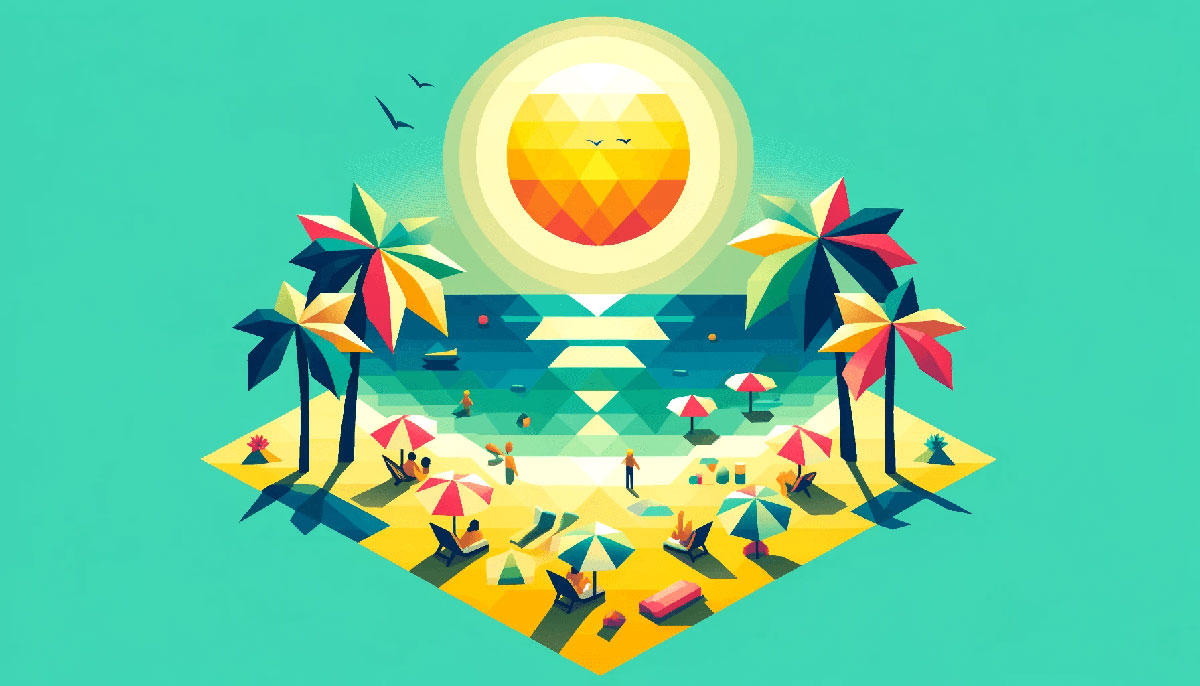
Color sets the mood before anything else loads, renders, or gets read.
The right summer color palette can make a design feel like cold lemonade on a hot afternoon. The wrong one makes it feel like a hardware store in January.
Summer pulls from a wide range – saturated tropical brights, sun-bleached neutrals, coastal blues, golden hour oranges, and soft pastel tones that sit closer to spring color palettes than most people realize.
Below you’ll find 15 curated seasonal palettes, each with full hex codes, mood breakdowns, and practical usage guidance for branding, web, and print.
Summer Color Palettes
Summer color palettes pull from the full range of the season: scorching midday heat, cool ocean water, overripe fruit, bleached sand. These are not subtle colors.
Whether you’re building a brand, designing a website, or putting together a mood board, the right warm-season palette sets the tone instantly. Below are 15 curated options, each with hex codes and practical use guidance.
Tropical Vibes
| #0095C9 | #7ABC00 | #FFA901 | #2D2A42 | #ECE6DC |
What This Palette Feels Like
High energy, high saturation. Bright blue and lime green together read as tropical birds, exotic foliage, and equatorial heat.
The deep navy anchors the palette; the sand tone keeps it from going full neon.
Best Use Cases
Beach brand websites, summer event posters, travel brochures, summertime logo design.
Works well in web design where you need clear visual hierarchy with bold accent colors.
Color Combinations That Work
Bright Blue + Golden Orange as a primary CTA pairing. Lime Green + Sand for backgrounds and card surfaces.
What to Pair It With
Crisp white (#FFFFFF) or off-white (#F5F5F0) for breathing room. Avoid adding more saturated colors – this palette is already pushing limits.
Summer Beach Party
| #2ECFCA | #F9F3DE | #F8DF77 | #FF4E62 |
What This Palette Feels Like
Playful, light, and unapologetically fun. The teal-to-beige contrast gives it a coastal feel without going full nautical.
Magic Potion Red is the surprise hit here – it keeps the palette from feeling too safe.
Best Use Cases
Pool party invitations, kids’ event branding, summer social media campaigns, packaging design for seasonal food and drink products.
Color Combinations That Work
Teal + Beige as the base duo. Drop Jasmine Yellow in for headings or illustrated elements; use red sparingly as a single focal point.
What to Pair It With
Warm white or light cream as a background. A dark charcoal (#2E2E2E) for body text keeps things readable without breaking the summer mood.
Sunset Coast
| #0A4C77 | #399ABE | #324055 | #A2320A | #F9C928 |
What This Palette Feels Like
Bold and sophisticated. This reads as late-afternoon light over open water – deep blues fading into golden heat.
More serious than most warm color palettes. Good for brands that want summer energy without the playfulness.
Best Use Cases
Premium travel brands, surf companies, outdoor gear, summer advertising campaigns targeting adult demographics.
Color Combinations That Work
Deep Ocean Blue + Golden Yellow as the primary pairing. Burnt Sienna as an accent for CTA buttons or highlighted text sections.
What to Pair It With
Slate Navy (#324055) works as a strong background alternative to black. Light sand (#F5ECD7) softens the overall contrast when needed.
Citrus Punch
| #FFCC00 | #F44E3F | #4A8E74 | #D5F2E3 |
What This Palette Feels Like
Sharp, energetic, and immediately readable. Lemon and Blood Orange create instant visual tension; Emerald Coast and Mint Whisper pull things back into balance.
This is a high-contrast palette that demands clean layouts.
Best Use Cases
Food and beverage branding, summer retail campaigns, bold poster design, event graphics where legibility at distance matters.
Color Combinations That Work
Lemon + Blood Orange as the hero duo for headlines. Mint Whisper as a background; Emerald Coast for dividers, icons, and secondary elements.
What to Pair It With
Clean white (#FFFFFF) for sections needing breathing room. Avoid adding purple or brown tones – they fight the citrus freshness.
Vibrant Summer
| #EC204F | #FD673A | #FF922C | #FEED47 | #2ECF03 |
What This Palette Feels Like
Maximum brightness. This is a full-spectrum warm palette that runs from red through orange, yellow, and straight into electric green.
It mirrors the full heat range visible in a sunset – and it’s not subtle about it.
Best Use Cases
Festival branding, music events, street food vendors, motion graphics, and any design needing maximum visual impact at first glance.
Color Combinations That Work
Use red and orange together for large-scale graphic elements. Reserve yellow for text highlights; green as a single energizing accent, not a background.
What to Pair It With
Only black (#000000) or very dark navy for text – anything lighter will fail contrast checks. This palette has no room for pastels.
Soft Summer Pastels
| #C7E3A4 | #FDF6C3 | #F8CBEE | #CAC3F7 | #C3E9F8 |
What This Palette Feels Like
Airy and calm. Muted greens, blush pinks, and powder blues that sit in the softer end of the pastel color palette range.
Low visual tension. High approachability.
Best Use Cases
Wellness brands, children’s content, summer wedding stationery, beauty and skincare packaging, lifestyle blogs and Instagram-first visual content.
Color Combinations That Work
Menthol Green + Diamond Blue as a background gradient. Classic Rose as the primary accent for headings, buttons, or decorative elements.
What to Pair It With
Soft white (#FEFEFE) or very light gray (#F7F7F7) as a neutral base. Avoid any dark or highly saturated colors – they’ll break the soft-season feeling immediately.
Poolside Pop
| #0198F1 | #49C2FF | #A9EEFF | #E999DE | #7C62C4 |
What This Palette Feels Like
Retro pool party meets modern digital. The blue range moves from vivid cerulean down to fresh air, giving natural depth without introducing new hues.
Lavender Magenta and Blue Violet push it into something more unexpected – closer to neon color palette territory than a standard coastal scheme.
Best Use Cases
Summer app UI, youth event marketing, swimwear or activewear brands, social media visuals targeting Gen Z audiences.
Color Combinations That Work
Aqua + White as the base; Vivid Cerulean for primary actions and headings. Use Lavender Magenta and Blue Violet as accent highlights only.
What to Pair It With
Pure white for clean backgrounds. Avoid warm tones entirely – this is a cool-spectrum palette and warm accents will look out of place.
Summer Linen
| #ECEAD1 | #C0DCE0 | #CAD2C5 | #E2C4AA | #FB5B05 |
What This Palette Feels Like
Quiet, elevated, and very editorial. Four muted neutrals held together by a single vivid orange that does all the work.
This is the palette equivalent of a white linen shirt with one bold accessory. Fits naturally alongside neutral color palettes but with more personality.
Best Use Cases
Lifestyle brands, boutique hotels, summer fashion editorials, brand style guides for premium or slow-living aesthetics.
Color Combinations That Work
Off White + Sage Gray as the primary background pairing. Warm Sand for card surfaces; Vivid Orange reserved strictly for CTAs, borders, or single headline words.
What to Pair It With
Natural textures in imagery (linen, wood, ceramic) reinforce the palette’s tone. For typography, a warm dark brown (#3B2A1A) reads better here than pure black.
Terracotta Summer
| #F9E4C8 | #F2A65A | #C1694F | #5B8A72 | #2C4A6E |
What This Palette Feels Like
Sun-baked clay and dried herbs. This palette sits at the warmer end of earth color palettes, grounded by muted teal and deep blue.
More rustic than tropical. Better suited to artisan or organic brand aesthetics than tech or youth markets.
Best Use Cases
Organic food brands, ceramics and homeware, Mediterranean-inspired hospitality, summer interior design mood boards.
Color Combinations That Work
Cream + Terracotta as the primary duo. Muted Teal as a strong secondary accent; Deep Blue for text and structural elements.
What to Pair It With
Natural textures and warm-toned photography. A clean off-white (#FAF6F1) works better than pure white as a background here.
Vintage Summer
| #00896F | #99BF72 | #F4DF9E | #E38F2D | #D45D37 |
What This Palette Feels Like
Faded and familiar. This belongs firmly in the territory of vintage color palettes – muted enough to feel nostalgic, warm enough to stay inviting.
The green-to-orange range mimics late summer foliage just before the shift into autumn.
Best Use Cases
Retro-themed branding, summer print design, artisan market collateral, editorial photography projects, hand-lettered packaging.
Color Combinations That Work
Viridian Green + Deep Champagne as the base. Cadmium Orange and Vermilion as accent colors for headlines and illustrated border elements.
What to Pair It With
Aged paper tones (#EDE0C8) or warm ivory. Pair with a serif font to reinforce the vintage tone.
Lavender Haze
| #E8E0F0 | #B8A9D9 | #7F99D6 | #F0C4D4 | #2F4F4F |
What This Palette Feels Like
Dreamy and cool. Lavender and soft blue read as evening light through gauze curtains – calm, feminine, and slightly otherworldly.
Dark Slate anchors the palette and prevents it from going too soft to be usable.
Best Use Cases
Wedding stationery, beauty and fragrance brands, summer wellness campaigns, lifestyle blogs, Instagram color palettes for soft aesthetic accounts.
Color Combinations That Work
Pale Lavender as background; Soft Blue for primary interactive elements. Blush Pink as a secondary decorative accent; Dark Slate for all body text.
What to Pair It With
Soft white (#FAFAFA) or very light gray. Avoid warm yellows or oranges entirely – they clash hard with this cool-toned scheme.
Watermelon Summer
| #FF6B6B | #4ECDC4 | #45B7D1 | #F7FFF7 | #2C3E50 |
What This Palette Feels Like
Instantly recognizable. Watermelon Red and Turquoise is one of the most reliable summer color combinations – high contrast, naturally complementary, and immediately seasonal.
The off-white and dark navy give it enough range to work in full layouts, not just as accent colors.
Best Use Cases
Summer food and beverage branding, fun color palette projects, kids’ summer camps, seasonal retail promotions, social media templates.
Color Combinations That Work
Watermelon Red + Off White as hero sections. Turquoise and Sky Blue for UI elements and card backgrounds; Dark Navy strictly for text.
What to Pair It With
A sans-serif font keeps it clean and modern. Avoid adding yellow – three primary-adjacent hues in one palette is one too many.
Golden Hour
| #FFD700 | #FF8C00 | #FF4500 | #20B2AA | #F5F5DC |
What This Palette Feels Like
Pure heat. Solar Yellow through Burning Sunset creates a warm gradient sequence that’s hard to ignore.
Sea Breeze Teal is the complementary color scheme move here – it cools the palette just enough to make it functional.
Best Use Cases
Sunset-themed event design, summer sale campaigns, travel and outdoor adventure branding, bold print design where warm impact is the goal.
Color Combinations That Work
Solar Yellow + Dark Orange for large graphic elements. Burning Sunset for single accent moments. Teal as the only cool relief; Beige as a soft neutral background.
What to Pair It With
Deep brown (#3B1F0A) or very dark navy for text – black works too but feels harsher. Keep backgrounds warm, not white.
Cool Summer Coastal
| #9C84D9 | #7F99D6 | #BB6FA9 | #F0F8FF | #2F4F4F |
What This Palette Feels Like
Refined and cool. This is a cool color palette built around blue-purple tones with a consistent muted quality – nothing here is saturated or aggressive.
Reads as sophisticated rather than playful. Better for adult audiences.
Best Use Cases
Wellness and spa brands, coastal resort identity, summer fashion lookbooks, premium skincare, portfolio color palette for designers or photographers.
Color Combinations That Work
Periwinkle + Alice Blue as the base pairing. Soft Blue for secondary UI elements; Rich Magenta as a controlled accent for headings or key CTAs only.
What to Pair It With
Very light lavender (#F3F0FA) as a background alternative to white. Avoid warm tones – even a touch of orange or yellow will conflict with the cool undertones throughout.
Retro Summer
| #FFEA48 | #FABB01 | #F25930 | #0081C7 | #48BCD7 |
What This Palette Feels Like
s poster energy. Yellow, orange, and blue in high contrast is a classic retro color palette move – bold, graphic, and immediately nostalgic.
Works especially well with thick typography and flat geometric shapes.
Best Use Cases
Retro-themed summer events, vintage-inspired brand identities, book cover design, music festival posters, throwback product packaging.
Color Combinations That Work
Gargoyle Gas Yellow + Portland Orange as the dominant warm duo. NCS Blue and Sea Serpent as the cool counterbalance; use Selective Yellow to bridge warm and cool zones.
What to Pair It With
Black (#000000) is the only right choice for text and outlines here – it reinforces the graphic, flat aesthetic. Avoid soft or gradient treatments; this palette wants hard edges.
FAQ on Summer Color Palettes
What colors are typically used in summer color palettes?
Summer palettes pull from warm yellows, coral, turquoise, and bright orange. Cooler variations include powder blue, lavender, and mint. The common thread is high brightness – these are light, open hues that reflect seasonal energy rather than depth or moodiness.
What is the difference between warm and cool summer palettes?
Warm summer palettes lean into oranges, reds, and golden yellows – think sunsets and citrus. Cool summer palettes favor blues, muted lavenders, and soft greens. Both qualify as seasonal, but they serve different moods, audiences, and design contexts.
How do I choose the right summer palette for my brand?
Start with your brand’s tone. Playful and energetic? Go vibrant. Premium and calm? Choose muted or cool tones. Consider color psychology – yellow signals optimism, blue signals trust, coral sits between warmth and approachability.
What hex codes work best for summer web design?
Reliable starting points: #FF6B6B (coral red), #4ECDC4 (turquoise), #FFD700 (solar yellow), #F9F3DE (warm sand), and #0095C9 (bright blue). Always test contrast ratios against your background before finalizing any palette for screen use.
Can summer color palettes work for professional or corporate brands?
Yes, with restraint. Use one or two seasonal accent colors alongside neutrals. A deep navy paired with amber or coral reads as professional without feeling cold. Avoid full-saturation tropical combos in finance, legal, or healthcare contexts.
How many colors should a summer palette have?
Four to five is the standard range. One background tone, one or two primary colors, one accent, and one text-safe dark. More than five and things get chaotic fast – especially with bright, high-color palette hues competing for attention.
What summer palette works best for social media graphics?
High-contrast combos perform best on small screens. Watermelon red + turquoise, citrus yellow + deep navy, or coral + off-white all read well at thumbnail size. Bright color palettes consistently outperform muted ones in feed engagement for seasonal content.
How do summer and autumn color palettes differ?
Summer palettes are brighter and cooler in undertone – lots of sky blues, lime greens, and hot pinks. Autumn color palettes shift into deeper, warmer territory: burnt orange, olive, rust, and brown. The saturation drops and the mood gets heavier.
Are pastel colors considered summer colors?
Soft pastels – blush pink, mint, powder blue – sit at the lighter end of summer’s range. They’re more common in soft summer palettes used for weddings, beauty, and wellness. Bolder, fully saturated hues define the more tropical or retro end of the spectrum.
What tools can I use to build a summer color palette?
Mood boards are a solid first step before committing to hex codes. From there, Adobe Color, Coolors, and Canva’s palette generator all let you test combinations quickly. Always preview your palette in context – colors behave differently on screen versus in print.
Conclusion
This conclusion is for an article presenting summer color palettes – 15 options ranging from retro brights to soft coastal neutrals, each built for real design use.
Picking the right seasonal palette comes down to knowing your audience and your medium. A vivid color palette hits differently on a festival poster than it does on a wellness brand’s homepage.
Pay attention to hue relationships within your chosen set. How colors interact matters as much as the individual shades.
For more seasonal inspiration, explore winter color palettes or popular color palettes used across branding, web, and print design.

Renowned for his expertise in logo design and visual branding, Bogdan has developed a multitude of logos for various clients.
His skills extend to creating posters, vector illustrations, business cards, and brochures. Additionally, Bogdan's UI kits were featured on marketplaces like Visual Hierarchy and UI8.
He also wrote in the past years on sites like Design Your Way, WebDesignerDepot, WPDean, Designmodo, Speckyboy, Slider Revolution, and more.
- The Windsurf Logo History, Colors, Font, And Meaning - 10 October 2026
- How to Remove Background From Product Photos (No Photoshop) - 10 October 2026
- How Designers can Build a Stronger Online Creative Identity - 9 October 2026

Bogdan Sandu is a seasoned designer who has been designing websites since 2008. Renowned for his expertise in logo design and visual branding, Bogdan has developed a multitude of logos for various clients. His skills extend to creating posters, vector illustrations, business cards, and brochures. Additionally, Bogdan's UI kits were featured on marketplaces like Visual Hierarchy and UI8. He also wrote in the past years on sites like Design Your Way, WebDesignerDepot, WPDean, Designmodo, Speckyboy, Slider Revolution, and more.
You Might Also Like