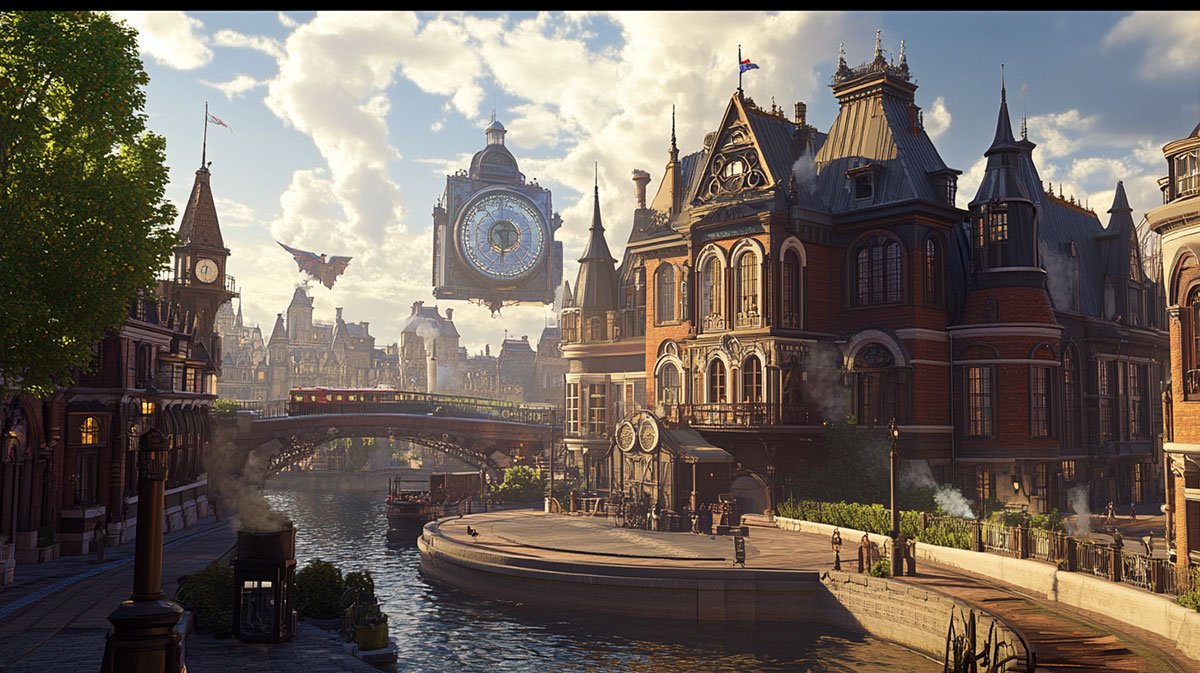
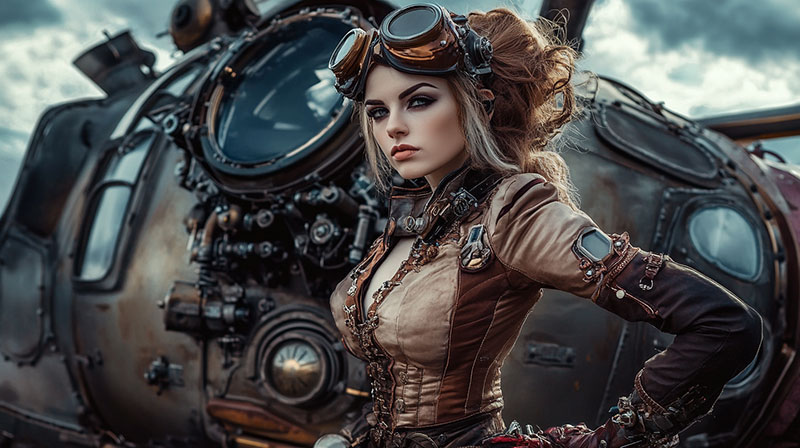
Steampunk art captures the imagination with a unique blend of Victorian era aesthetics and futuristic machinery. This genre, deeply influenced by figures like H.G. Wells and Jules Verne, features enchanting mechanical constructs, clockwork designs, and steam-powered gadgets.
You’re about to explore a selection of Steampunk art examples showcasing everything from intricate gear-driven mechanisms to whimsical airship designs. This article highlights artworks that seamlessly integrate brass, copper, and leather, emphasizing the retro-futuristic charm that defines Steampunk art.
By the end of this article, you’ll gain a deeper appreciation for how artists meld historical Victorian craftsmanship with imaginative scenarios. We will delve into standout pieces, including mechanical constructs, time machines, and steampunk fashion, offering a comprehensive overview of this fascinating genre.
Let’s dive into the world of Steampunk art examples and see how these artists redefine Victorian science fiction.
What is steampunk art?
Steampunk art is an artistic genre that blends Victorian-era aesthetics with futuristic and mechanical elements. It often features steam-powered machinery, intricate clockwork designs, and anachronistic technology. This art style combines history and fantasy, emphasizing brass, copper, gears, and leather to create a retro-futuristic look.
Examples of Steampunk art
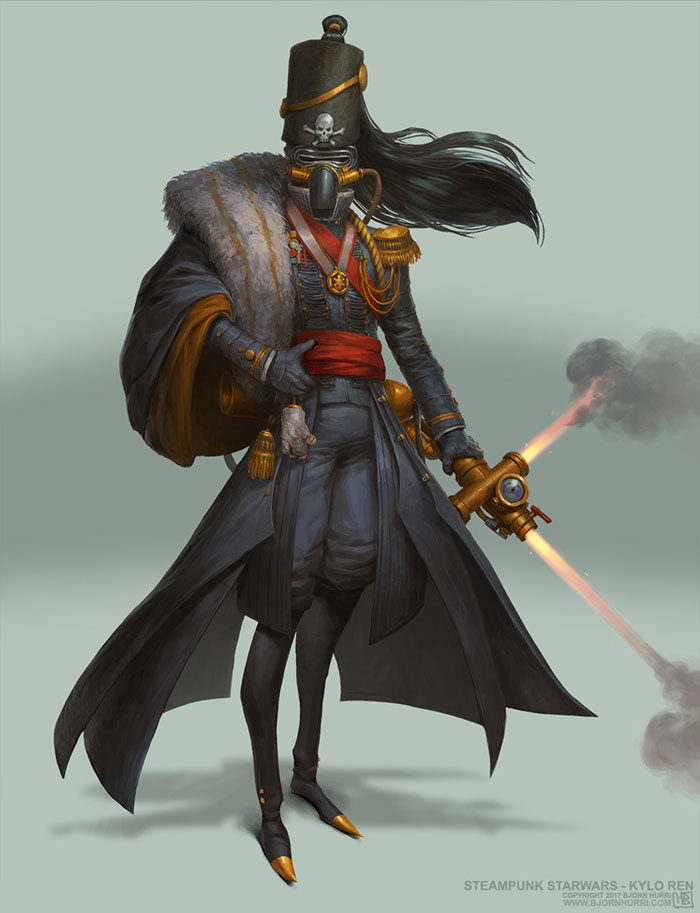
Steampunk Starwars – Kylo Ren
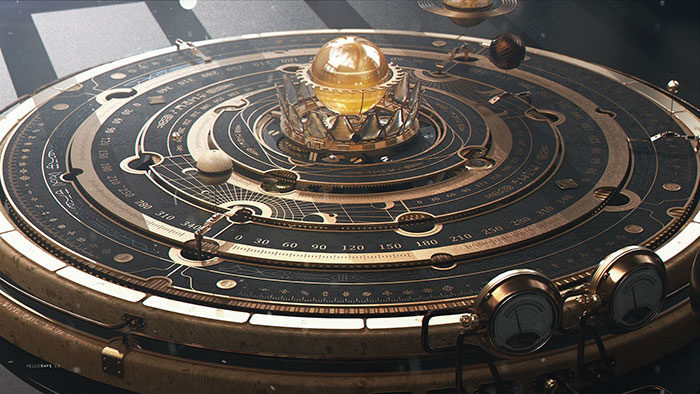
Steampunk Astrolabe Table with Ui
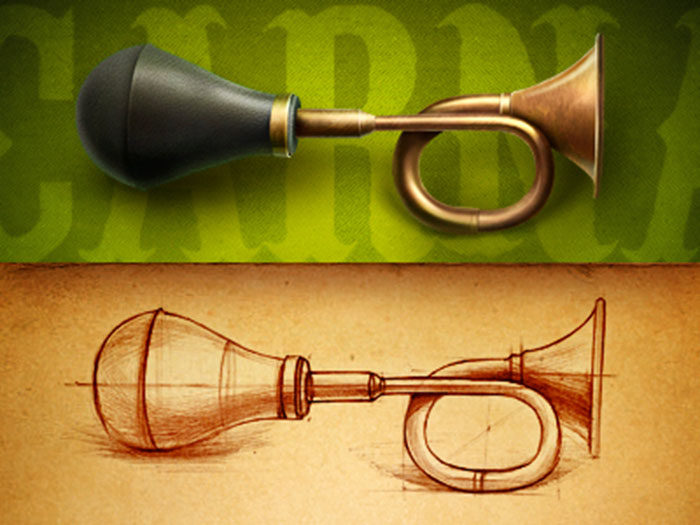
Antique Horn
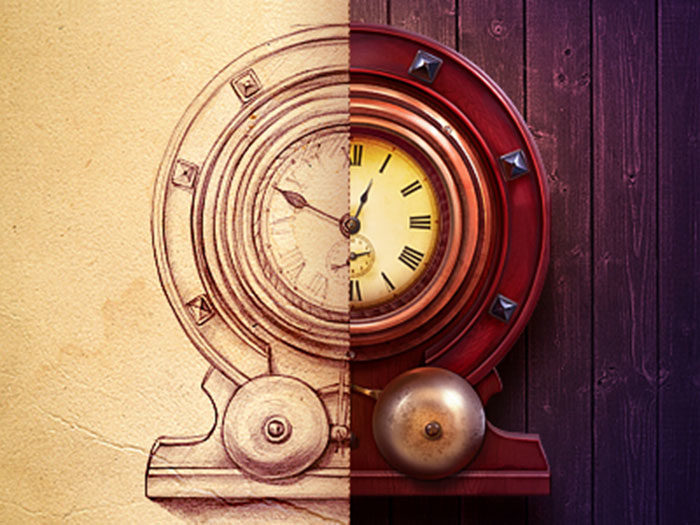
Clock
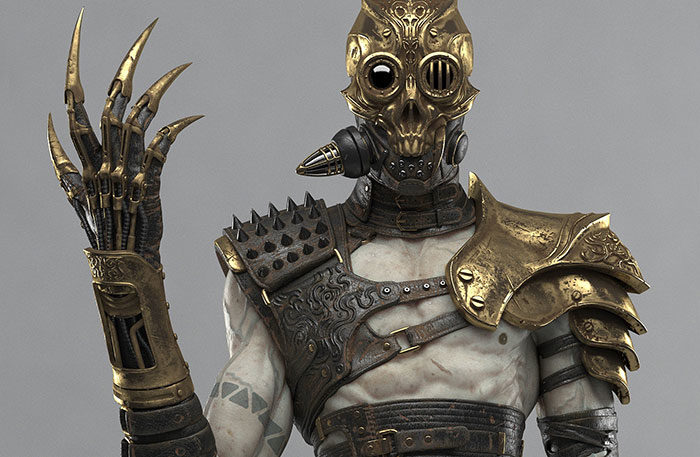
Steampunk Cyborg
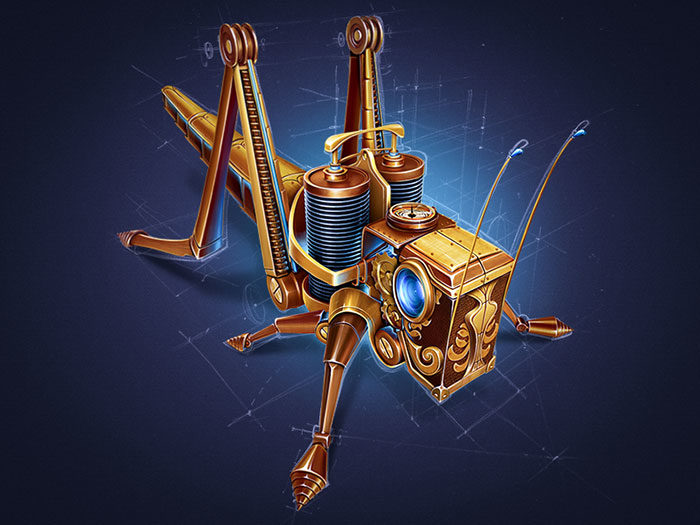
Mechanical Grasshopper
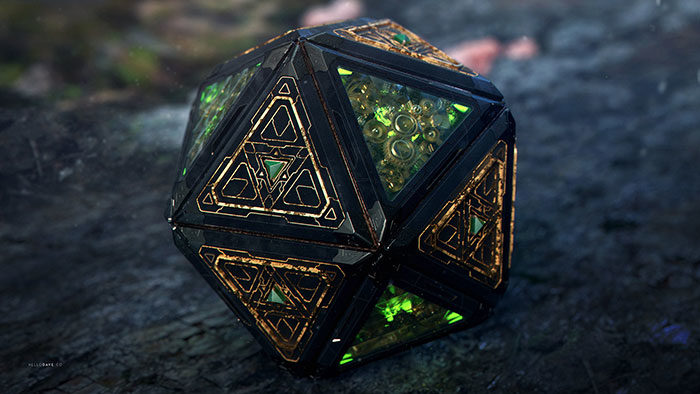
3D steampunk magic thingy
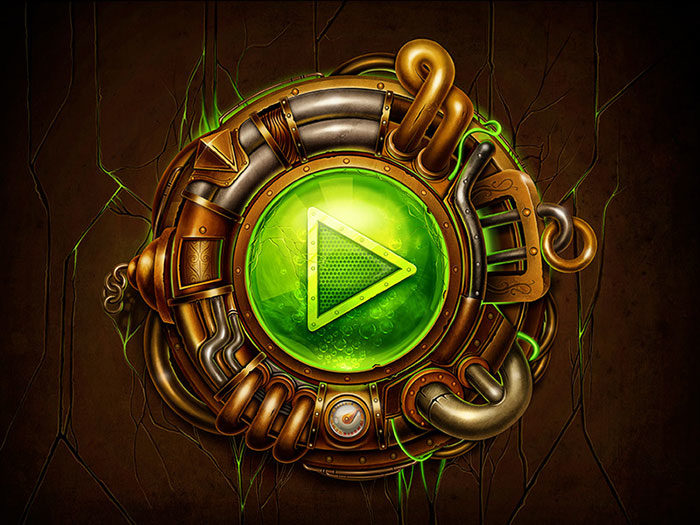
Steampunk button
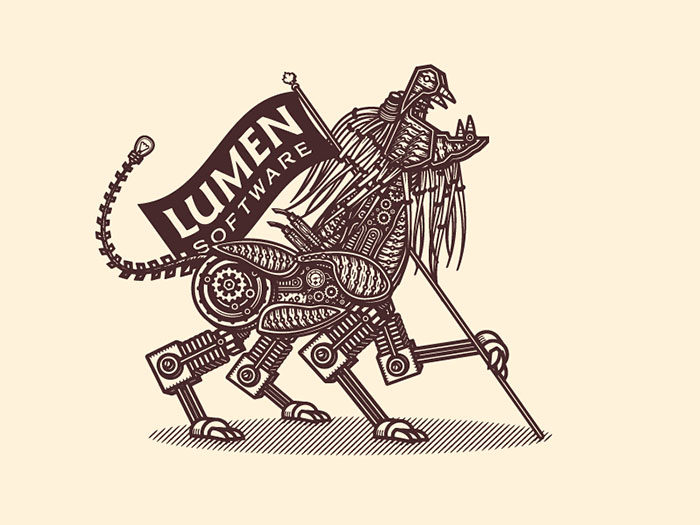
Lumen Software
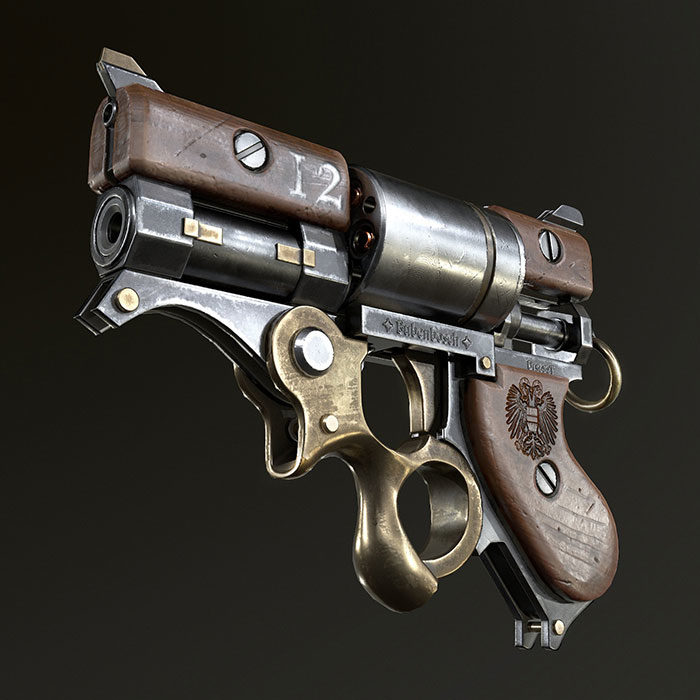
Steampunk revolver
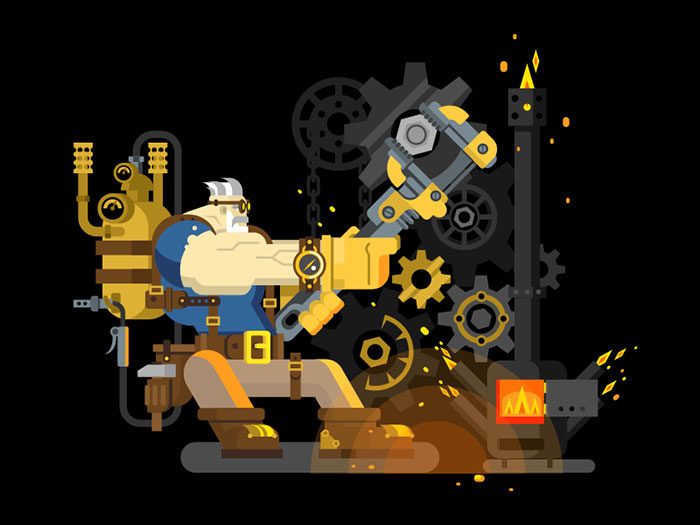
Steampunk engineer
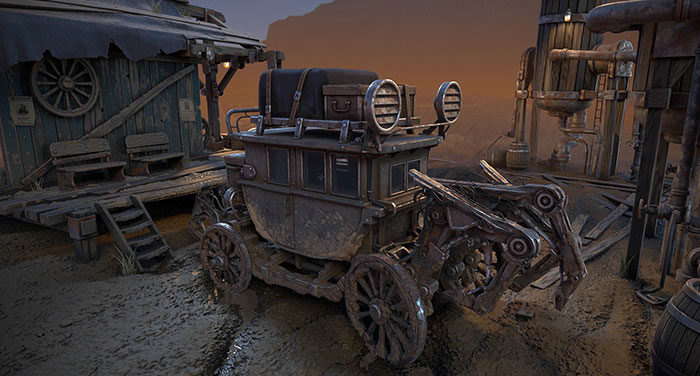
Wild West Challenge – Coach
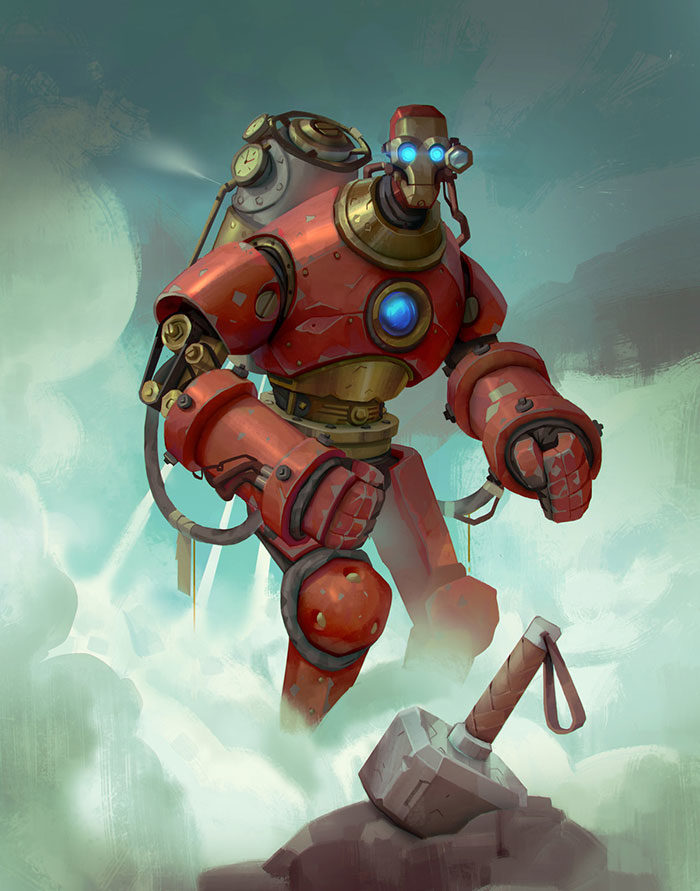
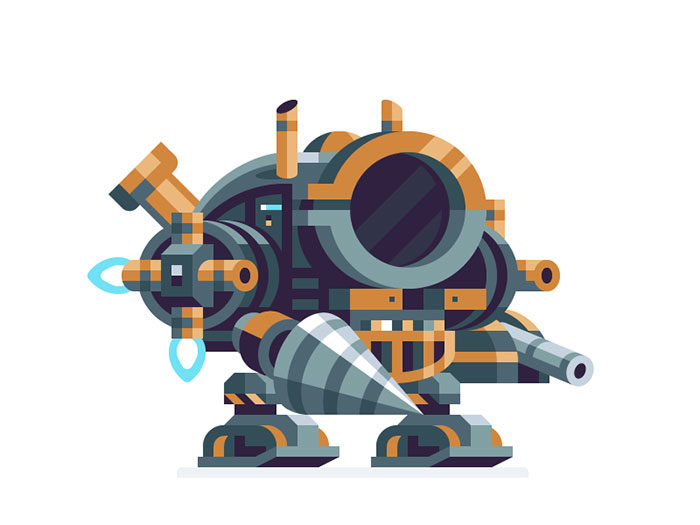
Mech Armor
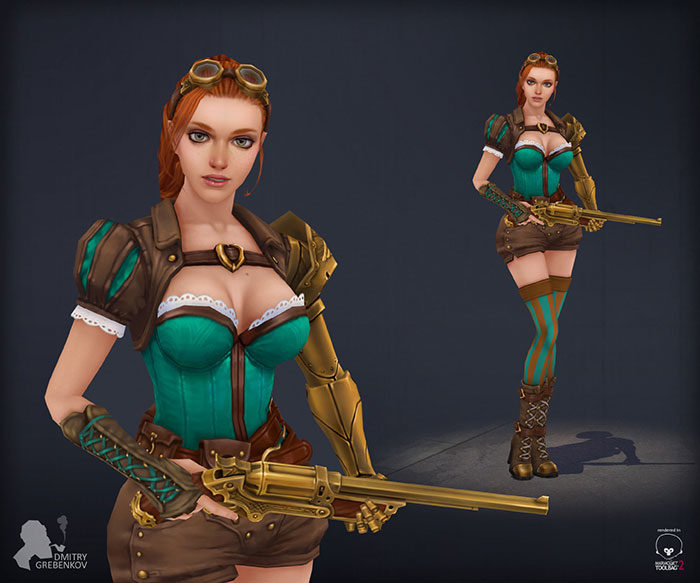
Steampunk Girl
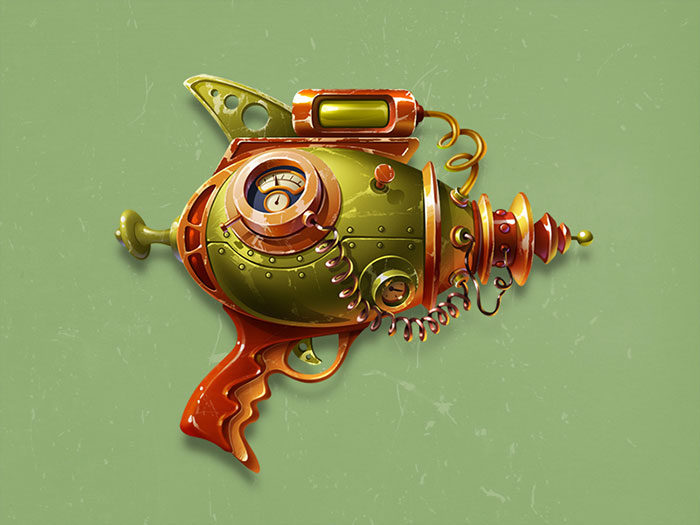
Just a gun
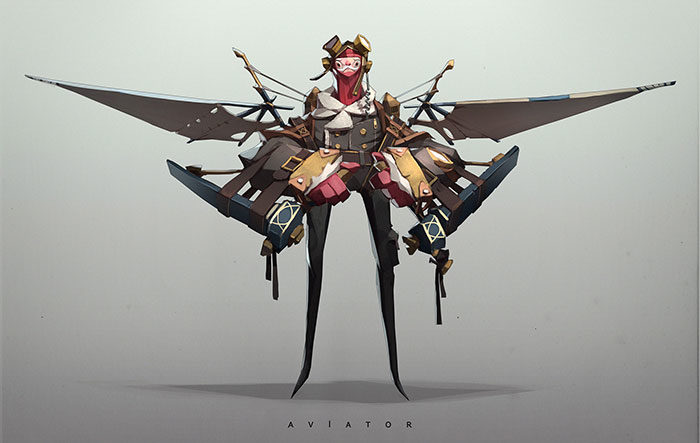
Aviator
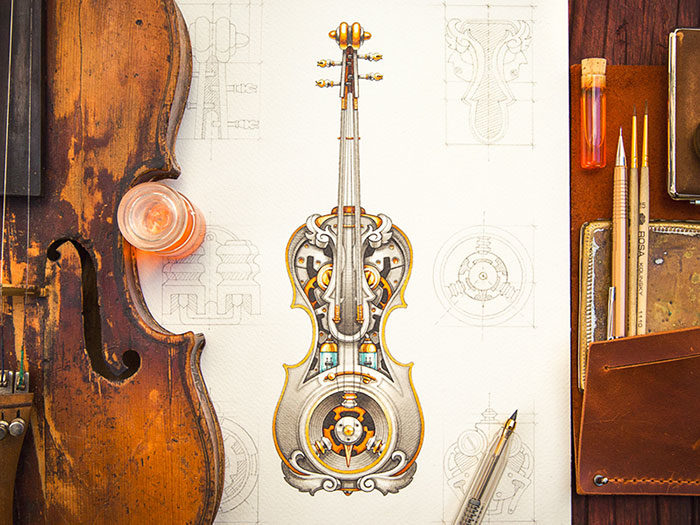
Steampunk violin
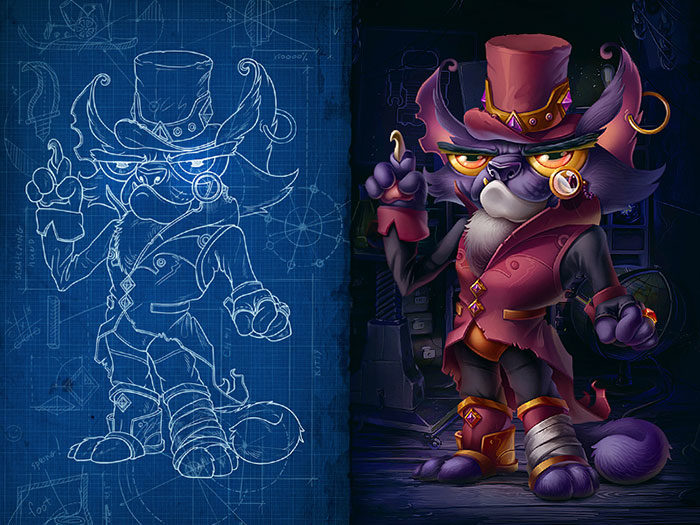
Spike | Twist the Gear
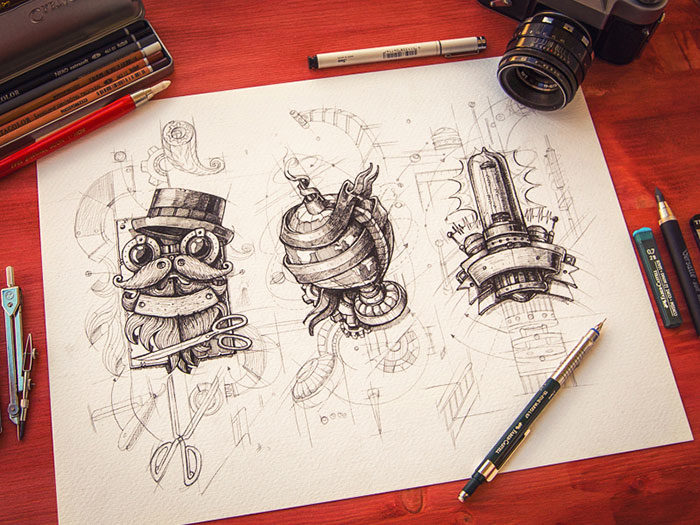
Steampunk logos
STEAMPUNK WEAPONRY

STEAMPUNK TRACTOR

STEAMPUNK COMPUTER

What could be more interesting than a Steampunk computer? By combining retro Victorian styles with futuristic designs, these Steampunk examples are highly effective and very appealing. Have a look at the details on this computer.
Brass finishes, a traditional timepiece and a fabulous keyboard create the striking visual impact only Steampunk can. And while you’re admiring this great steampunk artwork, don’t forget that this computer can also send out Morse Code messages!
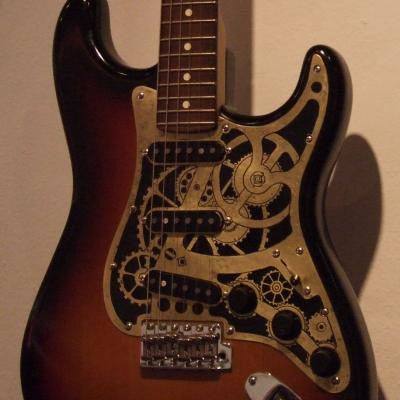
STEAMPUNK GUITAR
STEAMPUNK FLIP PHONE

STEAMPUNK SPIDER

STEAMPUNK R2-D2

Other Steampunk artwork examples
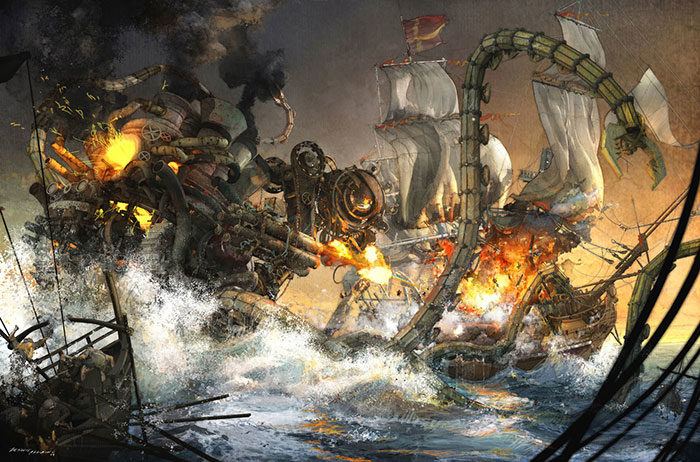
The Devils Cauldron
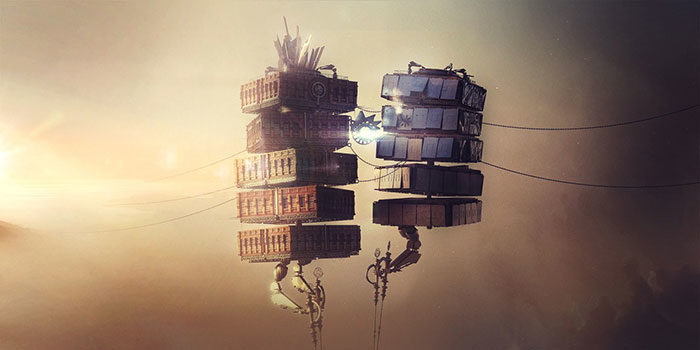
Dead cities by Maxim Goudin
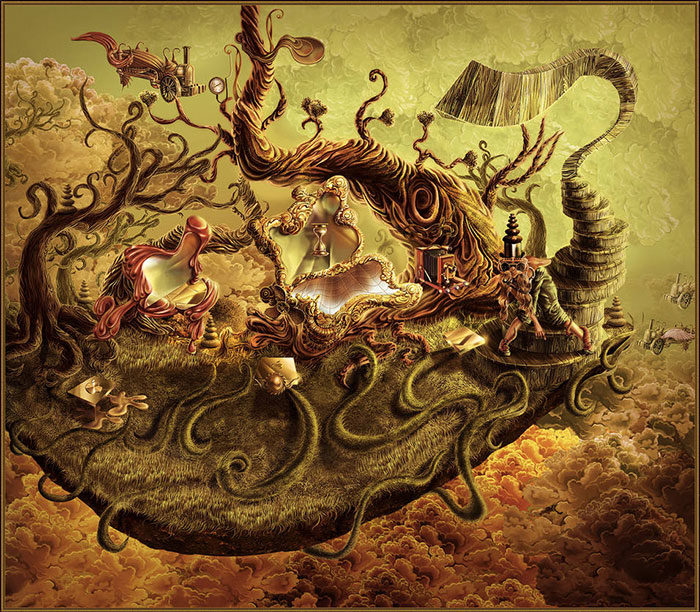
Steampunk Pioneer
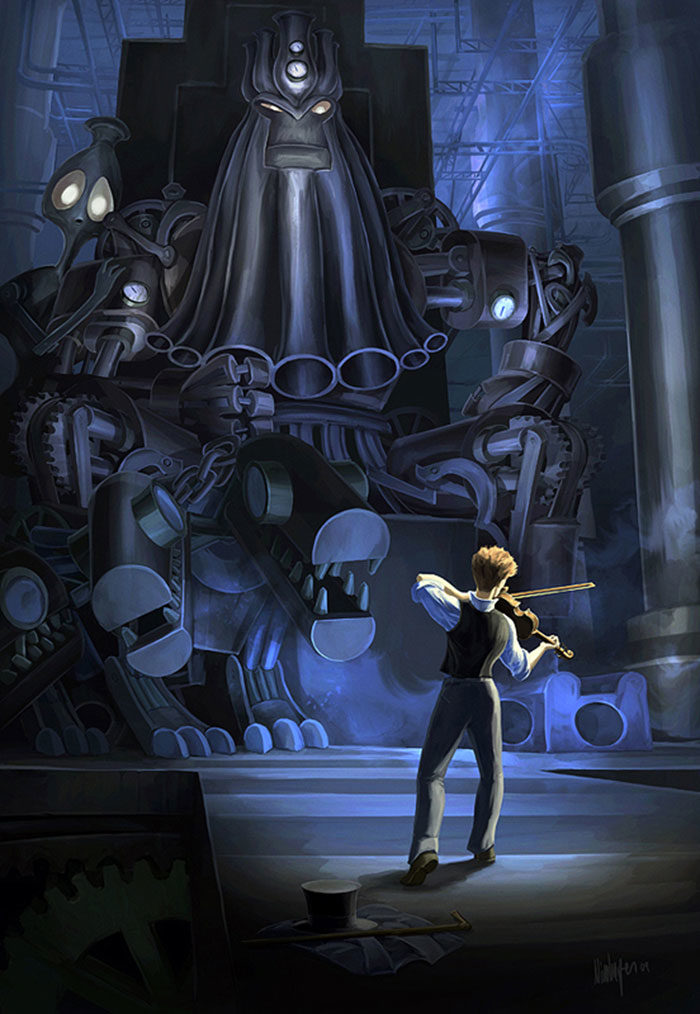
Orpheus
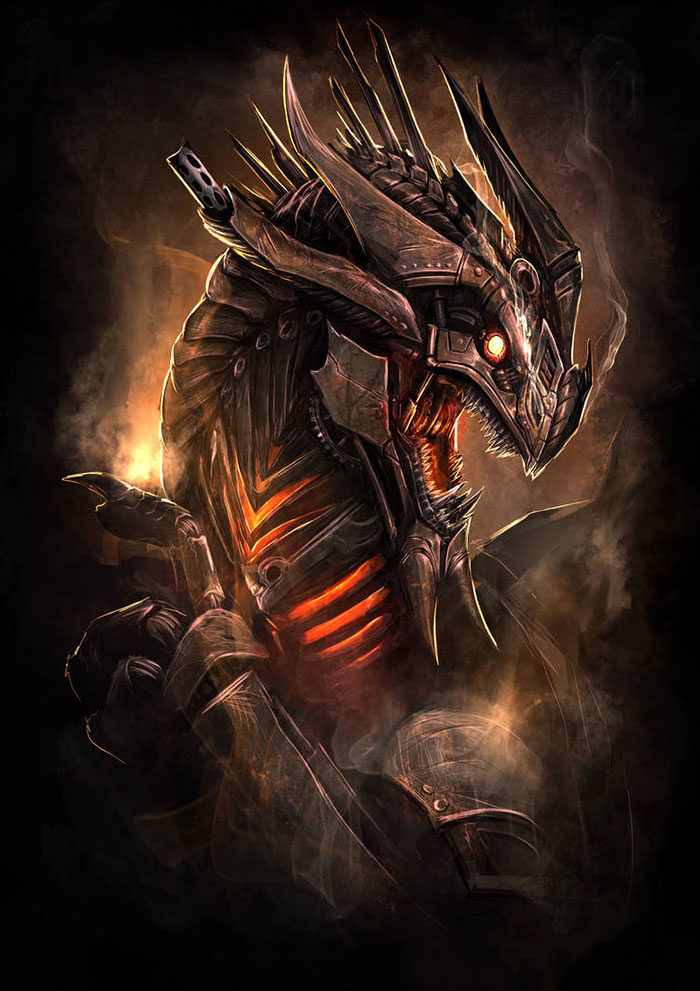
Steampunk Dragon by Tapwing
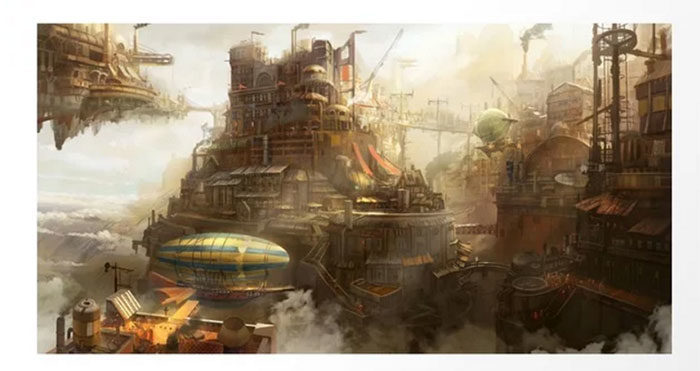
Steampunk city by Tyler Edlin Art
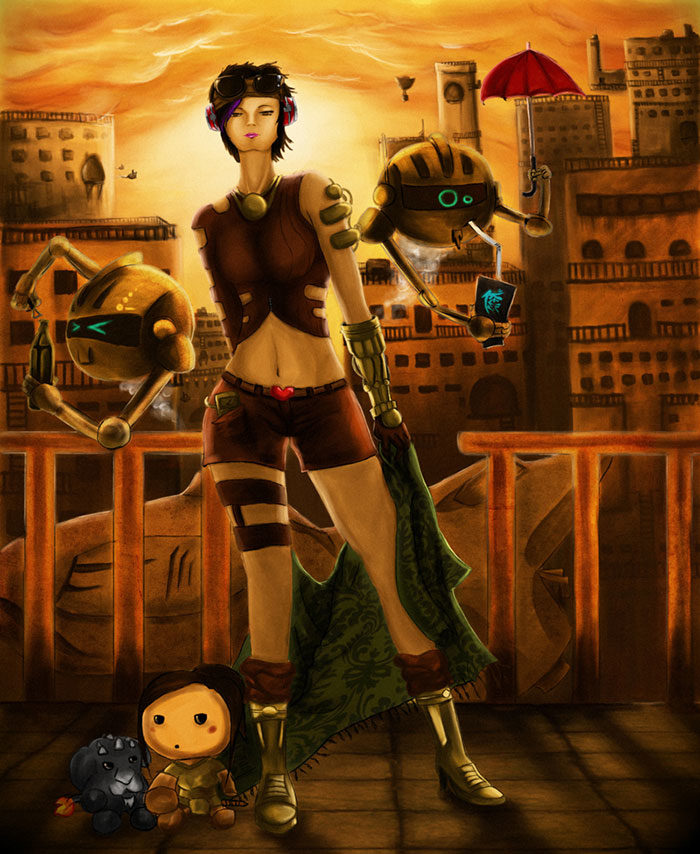
Steampunk Crayon
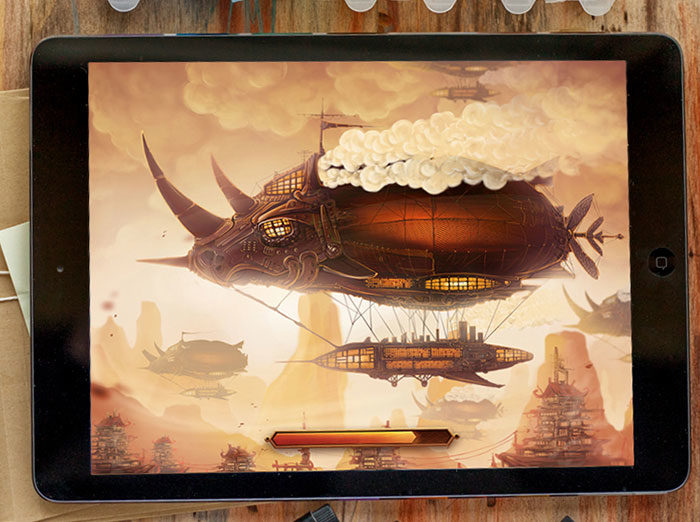
Airship by Inkration
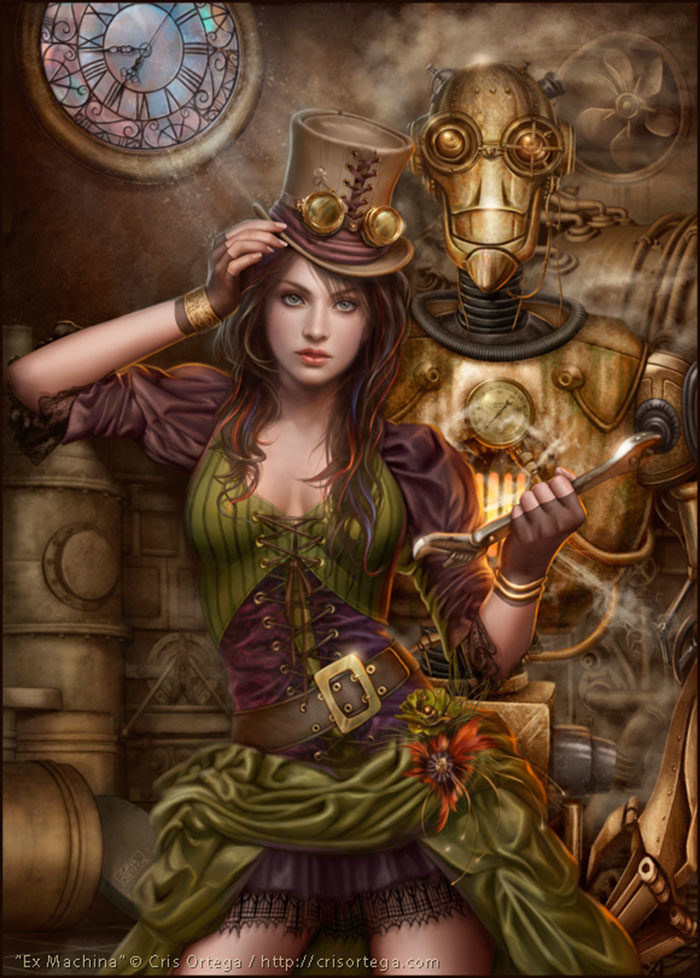
Ex Machina
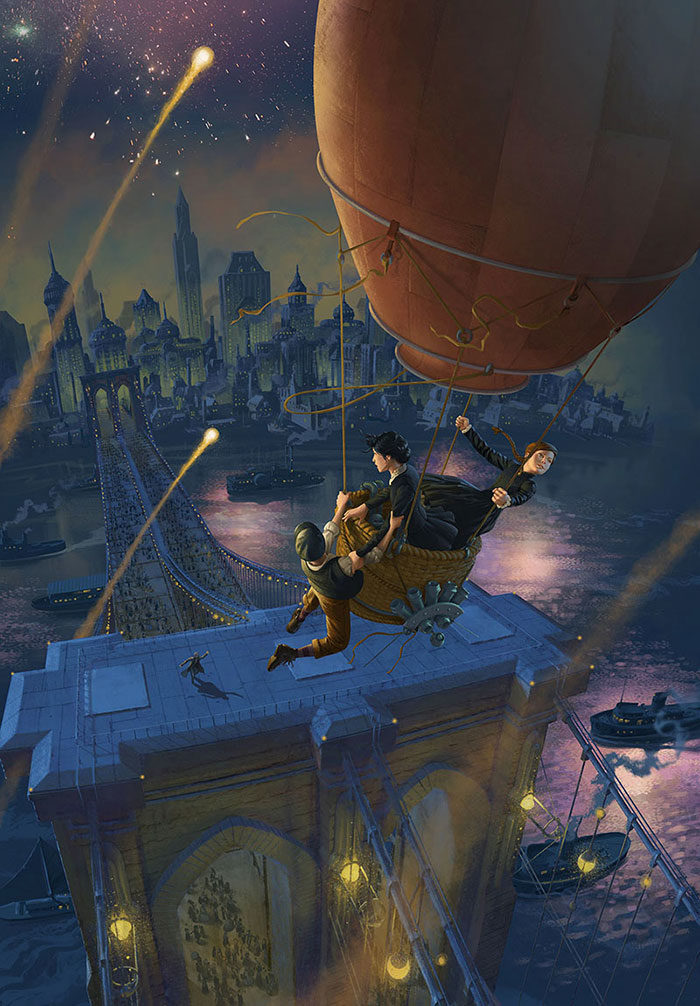
Victorian Interfase by Antonio Caparo
FAQ on steampunk art
What defines Steampunk art?
Steampunk art melds Victorian-era aesthetics with futuristic machinery. It often features gears, cogs, steam engines, and intricate mechanical constructs. Artists use materials like brass, copper, and leather. This genre draws inspiration from figures like H.G. Wells and integrates alternative history elements for a retro-futuristic look.
How did Steampunk art originate?
Steampunk art emerged from Victorian science fiction and the industrial imagination of authors like Jules Verne. This genre taps into anachronistic technology and 19th-century techniques, blending them with futuristic elements. The underlying idea is alternative history, where history is reimagined with advanced steam-powered machinery.
What materials are commonly used in Steampunk art?
Artists frequently use brass, copper, and leather to craft their works. Additionally, gears, cogs, and rivets are integral components. The style emphasizes handcrafted devices that appear both antique and advanced. Clockwork designs and steam engines are common elements.
What are some iconic themes in Steampunk art?
Iconic themes include airship designs, time machines, and steam-powered devices. The genre often covers Victorian architecture, mechanical constructs, and pseudo-Victorian era elements. Steam locomotives, fantasy machinery, and retro-futuristic designs with industrial gears also are prevalent.
How is Steampunk art different from other art genres?
Steampunk art uniquely combines 19th-century techniques with futuristic and industrial elements. It draws heavily on Victorian science fiction and alternative history. Unlike other genres, it prominently features gears, cogs, steam engines, and materials like brass and copper, emphasizing handcrafted and mechanical aesthetics.
Where can one find Steampunk art examples?
Steampunk art can be found in galleries, online platforms, and at conventions. Several artists showcase their work on websites dedicated to fantasy art, retro-futurism, and alternative history. Exhibitions focusing on Victorian craftsmanship and mechanical constructs also frequently feature this genre.
Who are some notable Steampunk artists?
Notable Steampunk artists include Jess Nevins, known for gear-driven designs, and James Ng, famous for fantasy machinery. Datamancer creates exquisite steampunk accessories and handcrafted devices. These artists bring Victorian science fiction to life using antique machinery and clockwork designs.
How can one create Steampunk art?
Creating Steampunk art involves utilizing brass, copper, and leather while incorporating gears, cogs, and steam engines. Start by studying Victorian craftsmanship and 19th-century techniques. Experiment with blending mechanical constructs and retro-futuristic designs to achieve a pseudo-Victorian look.
What role do gears and cogs play in Steampunk art?
Gears and cogs are central to Steampunk art, symbolizing mechanical movement and industrial elements. These components create a sense of clockwork functionality and steam-powered innovation. They emphasize the genre’s blend of anachronistic technology and Victorian-era aesthetics.
Why is Steampunk art appealing?
Steampunk art appeals due to its unique blend of history and fantasy, offering a retrofuturistic vision with detailed mechanical constructs. The intricate use of gears, cogs, and steam engines combined with Victorian craftsmanship captivates the imagination, showcasing both technical prowess and aesthetic elegance.
Conclusion
Steampunk art examples capture the essence of Victorian-era aesthetics combined with futuristic machinery. This genre, inspired by authors like H.G. Wells and Jules Verne, offers diverse artistic expressions. From gear-driven mechanisms to fantasy machinery, each piece highlights the intricate craftsmanship and mechanical constructs.
Exploring these examples, you’ve seen how artists employ brass, copper, gears, cogs, and leather. The creative integration of steam engines and clockwork designs makes each artwork unique, blending 19th-century techniques with retro-futuristic looks.
Understanding Steampunk art involves appreciating the detailed handcrafted devices and alternative history narratives. The mechanical elements underscore a fascination with anachronistic technology and industrial art.
By reviewing these examples, you have a comprehensive overview of what defines Steampunk art. This exploration sheds light on how Victorian craftsmanship merges seamlessly with imaginative concepts, offering a unique artistic journey into a nostalgic yet futuristic world.
If you enjoyed reading this article about these steampunk art, you should read these as well:

Renowned for his expertise in logo design and visual branding, Bogdan has developed a multitude of logos for various clients.
His skills extend to creating posters, vector illustrations, business cards, and brochures. Additionally, Bogdan's UI kits were featured on marketplaces like Visual Hierarchy and UI8.
He also wrote in the past years on sites like Design Your Way, WebDesignerDepot, WPDean, Designmodo, Speckyboy, Slider Revolution, and more.
- cPanel Hosting Explained: What Website Owners Can Manage in One Place - 27 October 2026
- Death Note Font Generator - 26 October 2026
- 5 Best AI Presentation Makers: Tested & Compared - 26 October 2026

Bogdan Sandu is a seasoned designer who has been designing websites since 2008. Renowned for his expertise in logo design and visual branding, Bogdan has developed a multitude of logos for various clients. His skills extend to creating posters, vector illustrations, business cards, and brochures. Additionally, Bogdan's UI kits were featured on marketplaces like Visual Hierarchy and UI8. He also wrote in the past years on sites like Design Your Way, WebDesignerDepot, WPDean, Designmodo, Speckyboy, Slider Revolution, and more.
You Might Also Like