
An immersive customer experience pulls people into your brand through their senses, a story and their own participation, so they take part instead of watching. To build one, start with a clear picture of your audience, give the experience a narrative, engage more than sight and sound, use technology such as AR or VR where it adds something, and measure the results so each version improves on the last. Customers now expect more than a transaction, and brands that offer a moment worth remembering give people a reason to return and a story to share.
What is an immersive customer experience?
It is an experience designed to engage customers fully, stimulating their senses and emotions so they feel connected to the brand or product. The idea goes beyond traditional marketing, where the customer is a passive audience. Here the customer steps into a different world or narrative and becomes an active participant.
It can happen in a store, at an event, on a website or inside an app. What they share is the effect: attention stays high because there is something to do, feel and remember. As a master in interaction design and immersive experiences explains, creating memorable digital experiences depends on captivating graphic content, so design is part of the job from the start.
How do you start by understanding your audience?
Research comes first, because an experience that delights one audience can leave another cold. Look at the preferences, interests and pain points of the people you want to reach. Market research, customer interviews and a look at what they already do with your brand all help.
The aim is to build something that feels made for them. When people recognize their own tastes and needs in an experience, they feel a sense of belonging, and that connection is what makes it stick.
Why does a narrative matter?
A story gives the experience a thread to follow, and a thread keeps people engaged from beginning to end. A compelling narrative can be an adventure, a personal transformation or even a mystery. What matters is that it fits your brand values and speaks to the audience you researched.
Build in a few moments of surprise, suspense and emotion, since those are what people retell afterward. For ideas on turning a brand story into visuals, see this piece on visual storytelling and brand narrative.
How do you use multisensory elements?

Add touch, smell and taste, not only sight and sound. The more senses involved, the richer and harder to forget the experience becomes. A café that smells of freshly brewed coffee, or a store where you can feel the fabric of a luxury product, does this without any technology at all.
Walk through your own customer journey and list what a customer sees, hears, touches and smells at each step. Wherever a sense is missing or unpleasant, you have something to fix.
Where does technology fit into immersive experiences?
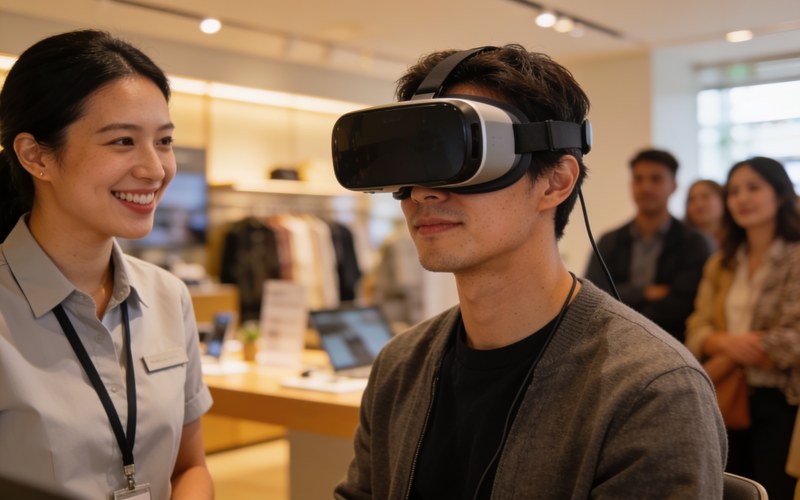
Technology widens what you can offer, as long as it serves the story. Augmented reality (AR), virtual reality (VR) and mixed reality (MR) can place customers in a virtual world or let them interact with your brand in new ways. A VR tour of a flagship store lets someone far away walk through it, and an AR app can bring a product to life in the customer’s own room.
If you sell products, an AR viewer is one of the simplest places to begin, and AI-generated visuals for AR and VR are making content for these formats faster to produce. Start with a small pilot before you commit to a large build.
How do you create emotional engagement?
Sensory stimulation catches attention, but emotion is what makes the experience last. Aim for moments of joy, wonder and excitement that connect with customers personally.
Heartfelt storytelling, interactive activities and personalized interactions all help build that connection. People forget features and remember how an experience made them feel.
Why does personalization matter?
One size does not fit all, so tailor the experience to the preferences and interests of each customer whenever you can. Use data and customer insights to make every interaction feel relevant. Small touches work well: a personalized welcome message or recommendations based on past behavior can noticeably improve how a customer feels about the brand.
Personalization shows people you value them as individuals, which deepens engagement. The broader trend is covered in this article on hyper-personalization in digital marketing.
How do you encourage participation and interaction?
Give customers something to do. Gamification, challenges and collaborative activities turn visitors into participants and build a sense of community. A scavenger hunt in a retail store or a live interactive performance both give people a chance to co-create the experience and share the excitement with others.
If you want more practical ideas, these interactive tips for great customer experience are a good next read.
How do you measure whether an immersive experience worked?
Define the measures before launch. Useful ones include engagement rates, customer satisfaction scores and social media mentions. Gather feedback from participants directly as well, since numbers rarely explain why something worked.
Then note what landed and what needs work, and apply it to the next version. Continuous learning is how a brand keeps its experiences relevant as customer expectations change.
Frequently asked questions
Do I need AR or VR to create an immersive experience?
No. Scent, texture, a strong story and a chance to participate can be just as immersive. Technology is one option, not a requirement.
Can small businesses create immersive experiences?
Yes. A small shop can use layout, music, scent, storytelling and personal service. These cost far less than a headset demo and often make a bigger impression.
How do I know if the experience is working?
Track engagement, satisfaction scores and social mentions, then compare them with what you had before. Direct feedback from participants fills in the gaps the numbers leave.
Where should you begin?
Choose one touchpoint in your customer journey, such as the first minute in your store or the first screen of your app, and redesign it around a clear story and at least one extra sense or interaction. Launch it in small form, measure the response and build from there.

Renowned for his expertise in logo design and visual branding, Bogdan has developed a multitude of logos for various clients.
His skills extend to creating posters, vector illustrations, business cards, and brochures. Additionally, Bogdan's UI kits were featured on marketplaces like Visual Hierarchy and UI8.
He also wrote in the past years on sites like Design Your Way, WebDesignerDepot, WPDean, Designmodo, Speckyboy, Slider Revolution, and more.

Bogdan Sandu is a seasoned designer who has been designing websites since 2008. Renowned for his expertise in logo design and visual branding, Bogdan has developed a multitude of logos for various clients. His skills extend to creating posters, vector illustrations, business cards, and brochures. Additionally, Bogdan's UI kits were featured on marketplaces like Visual Hierarchy and UI8. He also wrote in the past years on sites like Design Your Way, WebDesignerDepot, WPDean, Designmodo, Speckyboy, Slider Revolution, and more.
You Might Also Like