Burger King
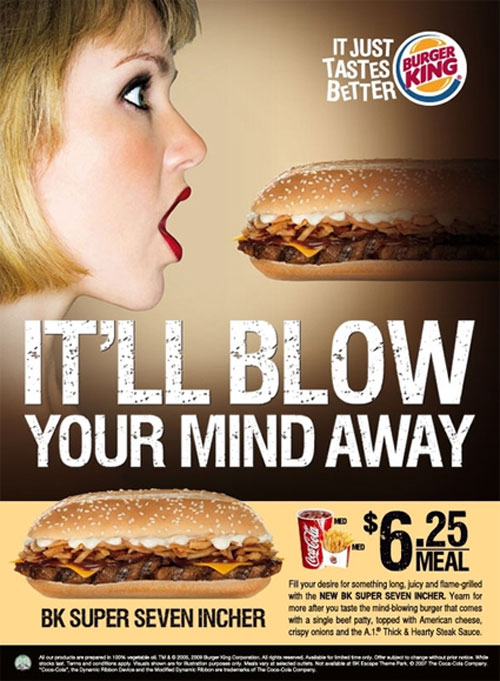
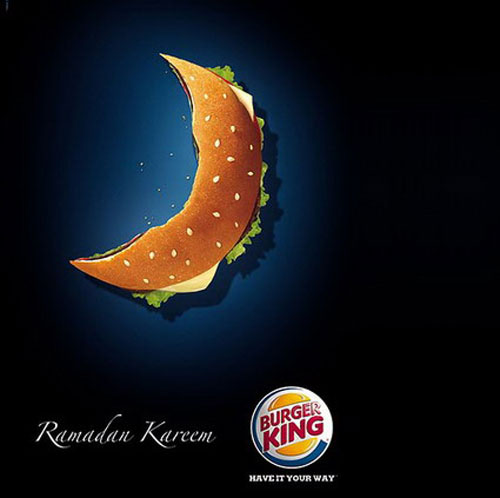
Burger King has prospered noticeably in the past few years, despite not making any big or radical changes. They marked a 9.6% increase in total sales and 4.5% increase in same-store sales. This all happened at the same time they merged with a coffee Chain from Canada, Tim Hortons.
They did add some new menu items and remodeled stores slightly, but they primarily concentrated on upping their marketing game, and they did so.
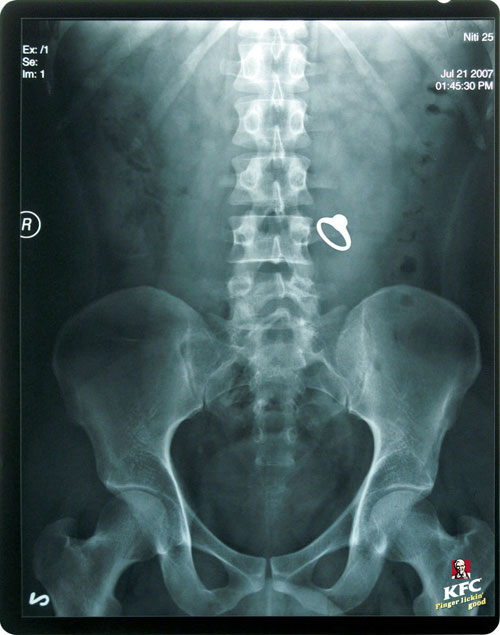
Kentucky Fried Chicken

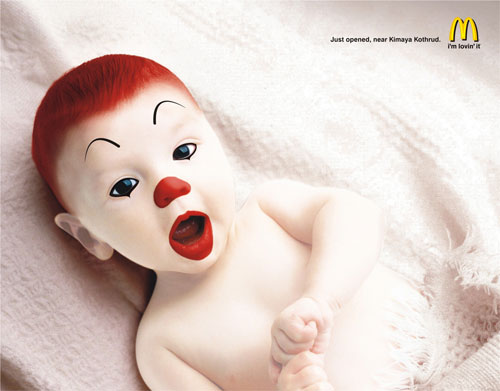
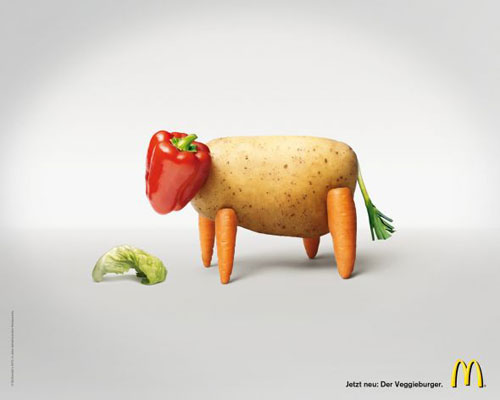
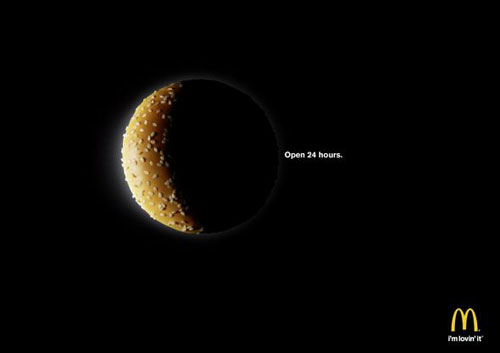
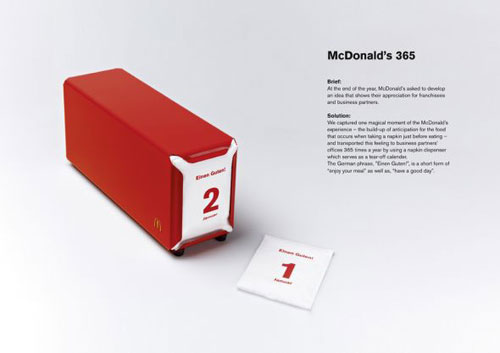
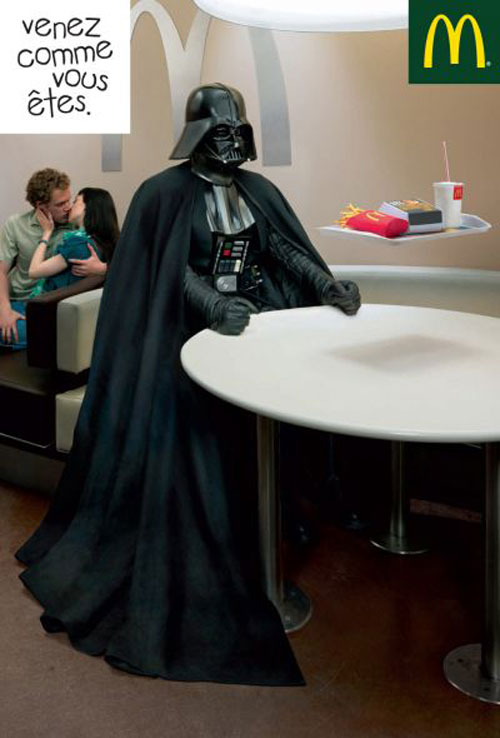
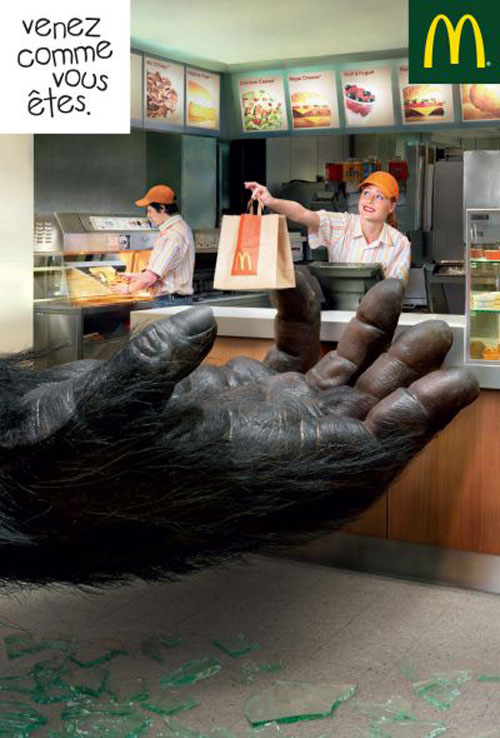
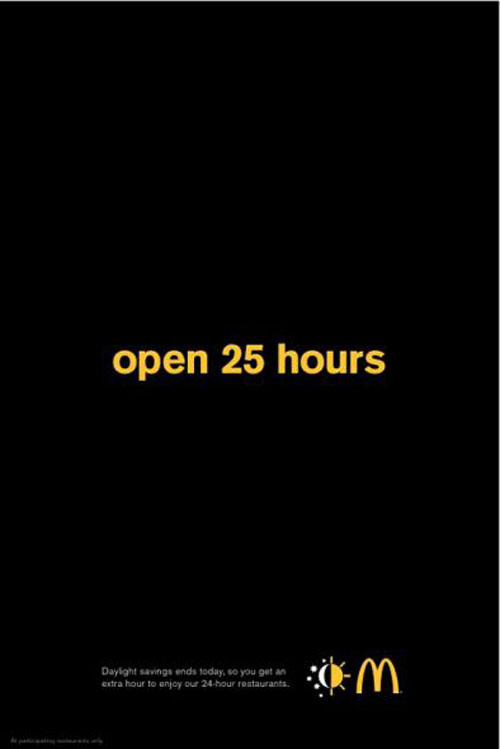
McDonald’s
People’s demands for food have changed significantly, since the 90’s, and people have sort of become more aware of food. No doubt social media has affected this as well, and now people want interesting and innovative recipes, not just the same-ol’, same-ol’.
And with places like Starbucks, Chipotle, Wendy’s, and Burger King rising to meet this challenge, McDonald’s had to step up their game and meet these challenges head-on, or else lose their place at the top.
While others worked on menus and their image mostly, McDonald’s, or rather their CEO Steve Easterbrook, decided to completely remake the entire company.
Costs went down and menus were broadened as McDonald’s restaurants all over the world suddenly started offering new toppings, all-day breakfast, even pastries in order to answer the Dunkin’ Donuts and Starbucks challenge, and the 5 dollar Sirloin Third Pound Burger.
The entire success of this new and radical tactic still remains to be seen, but the general impression is that they did what needed to be done.


Business Models Comparison
McDonald’s: the One and Only King of Burgers
Without any doubt, McDonald’s it the largest fast food chain in the U.S. and the biggest restaurant company in the whole World. They have 35,000 individual restaurants in over 120 different countries. The employee count is around 1.5 million and they serve 65 million meals daily. They are number one in revenue generated and customers served, and McDonald’s advertising strategies are also on the top.
Just to compare them with their ‘competition’, McDonald’s holds approximately 18.6% or the entire world’s fast food industry shares, while Burger King holds 4.6%. This practically means that McDonald’s could do business half as good as they are doing it now, and still come well on top.
Or, a different comparison by profit in the year 2014, McDonald’s earned 35.4 billion. That’s like Burger King, Subway, and Starbucks together and they still fall short.
Perhaps the best proof of how strong McDonald’s business model is is the fact that they almost haven’t felt the 2008-9 recession. Their figures were admirable, during and immediately after the recession, but 2014 is their worst year in the past decade, actually. This is why they’ve been working on revamping the entire business because even though their profits remain at the top, the shareholders and investors are still very much concerned with this.
This is why they implemented a new innovative business model which was designed by the brilliant Ray Kroc. They became the first World’s fast food restaurant chain that sells the rights to operate their restaurants. This proved to keep their costs down, as individual restaurant owners shared some of the responsibility, and it all resulted in the overall food costs remaining low while the service improved at the same time.
This was a genius move, since it is literally impossible for a big business to grow after it reaches a certain point, and is present in 120 countries worldwide only made things even more difficult to organize.
In 2015, the CEO of McDonald’s Steve Easterbrook held a shareholder presentation, in which he referred to the recent Burger King success. McDonald’s couldn’t follow their methods of course, because it was naturally impossible to cut corporate overhead costs in half like Burger King did, but Easterbrook came up with an alternative idea. Refranchising their company-owned restaurants was a good idea and it increased their margins.
Burger King: A Fast Food Revolution
The beginning of the 21st century was not a good time for Burger King. They were the main competitor to McDonald’s, but slowly one by one, all other chains (Starbucks, Wendy’s, Subway…) passed them by.
By 2010, Burger King was at their low point but was bought for 4 billion by a private firm called 3G Capital. They’ve since started a recovery that has yielded enormous success.
5 years later, 2015, Burger King was not only back on track, but outperformed Wendy’s and even McDonald’s. Now, Burger King was the one everybody else was looking up to, and 3G Capital succeeded in this by doing two main things: simplifying the company’s public image and trimmed business fat. The operating margins doubled from 24% to 48% in-between 2011 and 2014.
Their success is also owed to mostly franchising. Less than 1% of the total business is company-owned restaurants. They have franchised the entire business and earn primarily from these sources. Franchise stream, with royalties and fees, is what 3G Capital is focusing on for their main profit. They also do some property lease, but the official goal is to move away from this.
During the period of Burger King’s revival, McDonald’s was number one, had the widest menu and the drive-through wait lines were the highest they’ve ever been. Burger King decided to revamp their own menu, and add some direct answers to some famous McDonald’s items, like the Big King sandwich. Big King sandwich is a direct answer to Big Mac. It has three buns, two patties, but the ‘special sauce’ is where it is a bit different. Also, they answered McDonald’s McRib sandwich with a cheaper, 1% Burger King BBQ Rib.
McCafe menu was also matched with a completely new list of coffee items at Burger King. While McDonald’s was already in league with Starbucks for this, Burger King merged with Tim Hortons from Canada. Tim Hortons is the top Canadian Coffee and donut outlet, and their merger resulted in stocks rising to incredible heights, after this 11 billion dollar deal.
When comparing the two, McDonald’s and Burger King, there is no doubt that both have impeccable business models and that both chains looked up to one another at certain points of this battle, if we can call it that. But, while McDonald’s is constantly being criticized for their unhealthy fat concentration in some menu items or the high prices, Burger King is possibly cheaper, and definitely has a better way to deal with the critics with their new “Satisfries”. They even came up with a 40% less fat French Fry variation, which has 30% less total calories than the ones at McDonald’s.
As far as the internet campaigns go, McDonald’s has some really impressive figures to be sure. They have 1,955 subscribers on YouTube, and 6,338,192 video views of their 40 total videos. Social media numbers are also incredible. They have 17,140,598 FaceBook page likes with 641,051 people talking about them daily. Facebook page records 2,142,881 visits. Twitter numbers are also astronomical: 343,322 followers and 6919 tweets.
Burger King is clearly far behind in the internet marketing game. Their Facebook like count is 4,315,281 on the same day McDonald’s figures were counted. Burger King’s twitter has 45,969 followers, and 31,790 YouTube subscribers. Figures obviously much smaller than McDonald’s in social media waters, but YouTube figures are actually higher…much higher. This may be due to the fact their YouTube page is directly linked to their Tumblr account, where you can track a 28-day King Tour.
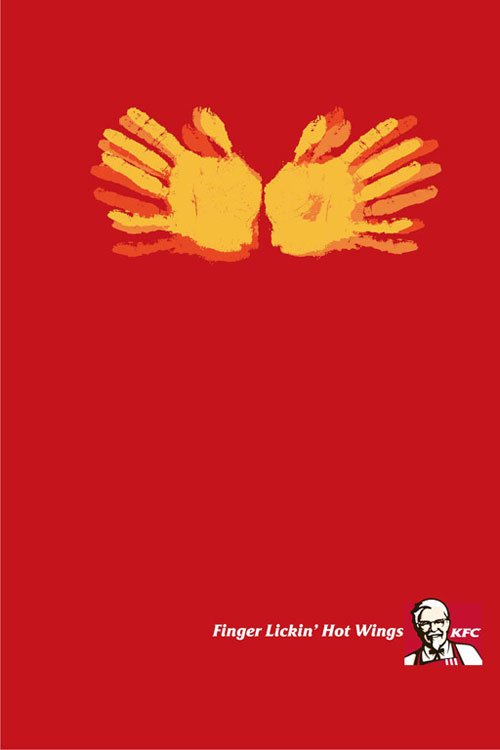
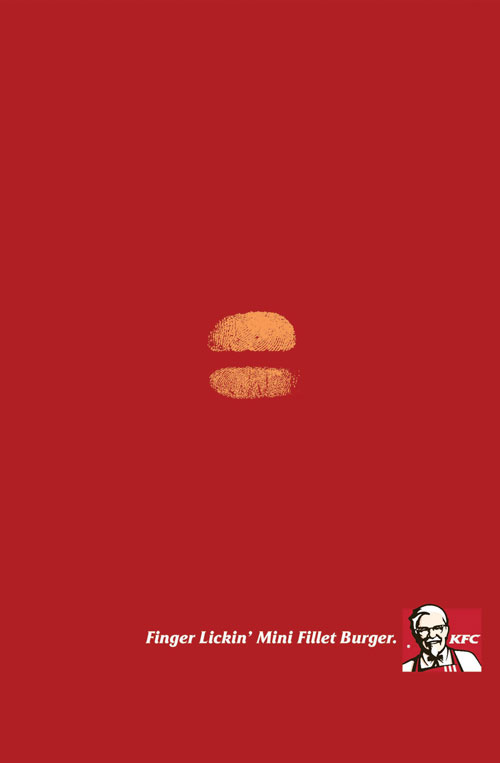
To compare things further in the social media and internet advertising game, KFC could be a good example. KFC commercials tend to have a more relaxed tone and less serious videos and posts. They also use their Facebook to promote charity work. They do this by obligating to donate £ 1 for every share of their posts, with a £ 10.000 maximum. Internet and social media users seem to respond positively to this and their Facebook account grows more and more.
FAQ On Ads For Burger King, KFC, And McDonalds
What makes Burger King’s ads stand out?
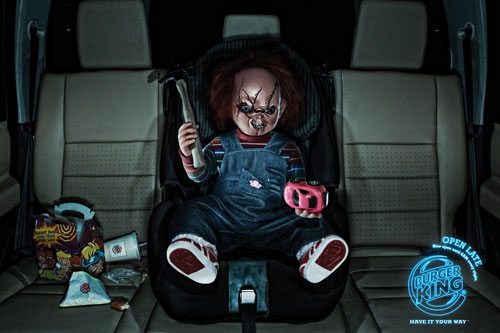
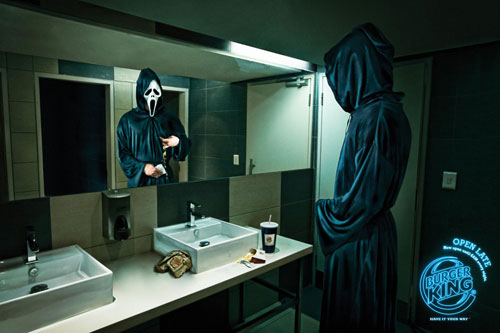
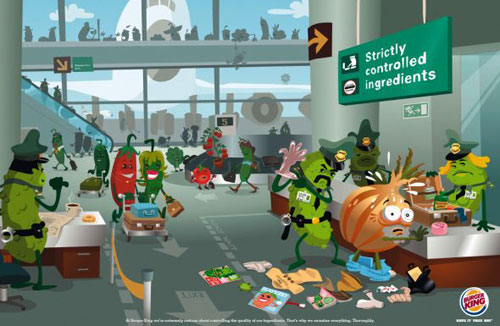
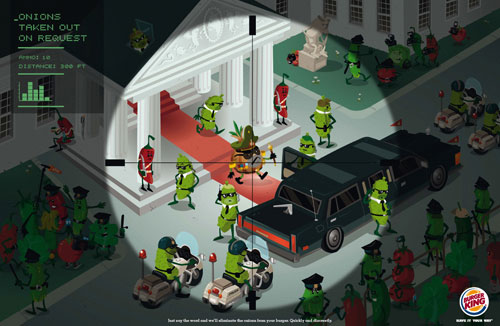
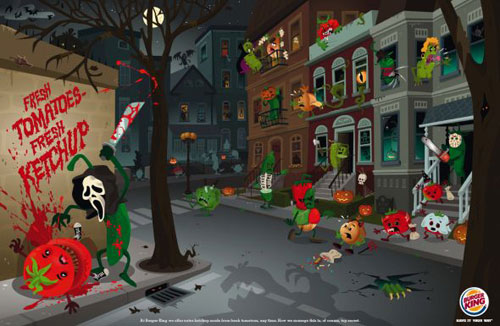
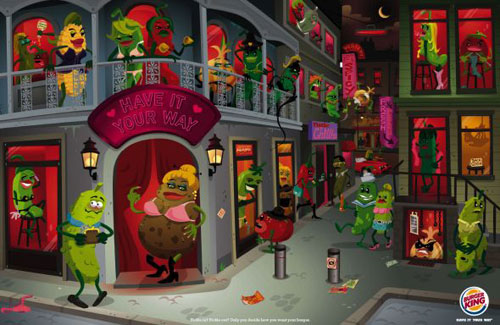
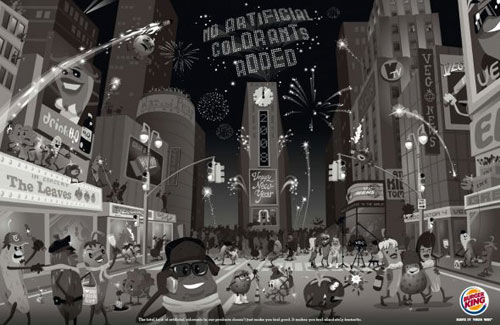
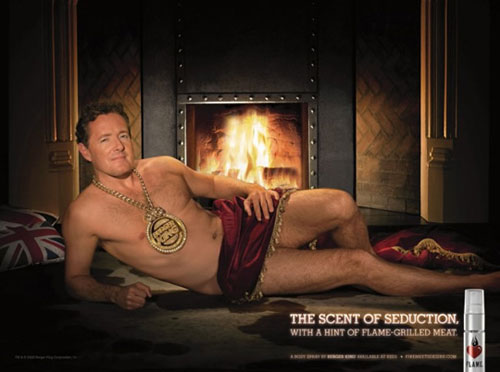
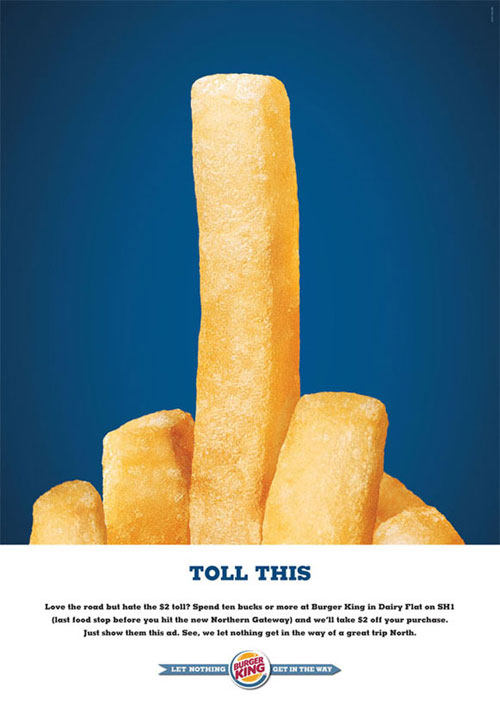
Burger King’s ads are known for their bold, edgy approach. They leverage flame-grilled imagery and Whopper promotions to highlight their unique offerings.
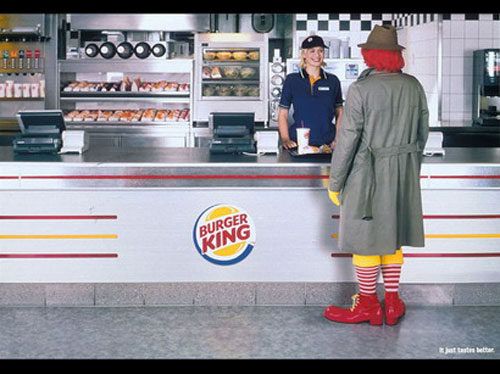
Their marketing often includes cheeky references to competitors, making their campaigns memorable and engaging for their target audience.
How does KFC market its Original Recipe chicken?
KFC’s marketing for the Original Recipe chicken focuses on its secret blend of 11 herbs and spices. Ads often feature Colonel Sanders to emphasize tradition and authenticity.
Seasonal promotions and KFC buckets are prominently displayed, creating a nostalgic appeal that resonates with consumers.
What strategies does McDonald’s use in its advertising?
McDonald’s uses a mix of television commercials, digital marketing, and social media campaigns to reach a broad audience.
Their ads often highlight popular items like the Big Mac and Happy Meal, emphasizing convenience, value, and family-friendly dining experiences.
How do these brands use social media in their campaigns?
Burger King, KFC, and McDonald’s all leverage social media for customer engagement and to launch promotional offers.
They use platforms like Instagram and Twitter to create buzz, share behind-the-scenes content, and interact with followers, keeping their brands relevant and engaging.
What are some iconic Burger King ad campaigns?
Iconic Burger King campaigns include the “Whopper Detour,” where they offered a Whopper for a penny if ordered near a McDonald’s, and the “Moldy Whopper” campaign, showcasing their commitment to natural ingredients. These ads are innovative and attention-grabbing.
How effective are KFC’s TV commercials?
KFC’s television commercials are highly effective, often featuring Colonel Sanders in humorous scenarios.
These ads highlight the Original Recipe and other menu items, making them memorable and driving home the brand’s unique selling points to a wide audience.
What kind of promotions does McDonald’s run?
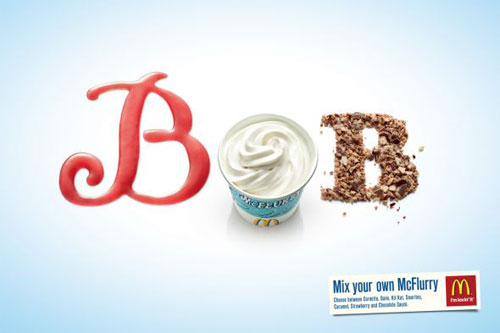
McDonald’s frequently runs seasonal promotions like the McRib return and menu items like the McFlurry.
They also use loyalty programs and limited-time offers to attract customers. Their promotions are designed to create excitement and drive sales.
How do these brands differentiate their ads from each other?
Each brand has a distinct advertising style: Burger King uses edgy and provocative tactics, KFC focuses on tradition and humor with Colonel Sanders, and McDonald’s emphasizes family-friendly values and convenience. This differentiation helps them stand out in a crowded market.
What role does digital marketing play for these fast food chains?
Digital marketing is crucial for Burger King, KFC, and McDonald’s. They use it to reach a tech-savvy audience, launch social media campaigns, and offer app-based promotional offers. Digital marketing helps them stay current and connected with consumers.
How important is brand consistency in their advertising?
Brand consistency is vital. Burger King, KFC, and McDonald’s ensure their ads reflect their brand values and messaging across all platforms.
This consistency helps build trust and recognition, making their marketing efforts more effective and memorable.
Conclusion
- 60 Absolut Vodka Print Advertisements
- Levi’s Stylish Print Advertisements – 59 Prints
- Diesel Jeans Advertising Campaigns – 45 prints

Renowned for his expertise in logo design and visual branding, Bogdan has developed a multitude of logos for various clients.
His skills extend to creating posters, vector illustrations, business cards, and brochures. Additionally, Bogdan's UI kits were featured on marketplaces like Visual Hierarchy and UI8.
He also wrote in the past years on sites like Design Your Way, WebDesignerDepot, WPDean, Designmodo, Speckyboy, Slider Revolution, and more.
- The Coda Logo History, Colors, Font, And Meaning - 20 October 2026
- How Can Designers Turn AI Image Prompts Into Polished Visuals? A Practical Workflow - 20 October 2026
- Top Military and Defense UI/UX Design Services Companies: A 2026 Buyer’s Guide - 19 October 2026

Bogdan Sandu is a seasoned designer who has been designing websites since 2008. Renowned for his expertise in logo design and visual branding, Bogdan has developed a multitude of logos for various clients. His skills extend to creating posters, vector illustrations, business cards, and brochures. Additionally, Bogdan's UI kits were featured on marketplaces like Visual Hierarchy and UI8. He also wrote in the past years on sites like Design Your Way, WebDesignerDepot, WPDean, Designmodo, Speckyboy, Slider Revolution, and more.
You Might Also Like