

Your next concept art piece needs a setting that stops viewers mid-scroll. Fantasy landscape ideas transform blank canvases into otherworldly environments that define entire fictional universes.
Digital artists and worldbuilders constantly search for fresh terrain concepts. Floating islands, glowing mushroom forests, and crystal caves represent just the beginning of what’s possible when imagination meets technique.
This guide explores twenty distinct landscape types with specific visual elements, color palettes, and artistic approaches. You’ll learn how to construct believable fantasy environments from atmospheric perspective to lighting theory.
Whether you’re designing game worlds, illustrating novels, or building personal portfolio pieces, these landscape concepts provide structured starting points for your next creative project.
Fantasy Landscape Ideas
| Fantasy Setting | Core Environmental Attributes | Visual Characteristics | Creative Application Value |
|---|---|---|---|
| Floating Islands | Suspended landmasses with defied gravity mechanics, aerial navigation required, vertical exploration emphasis | Waterfalls cascading into clouds, exposed rock underside, sky-bound vegetation | High fantasy worlds, adventure narratives, verticality-focused gameplay |
| Glowing Mushroom Forests | Bioluminescent fungal ecosystems, low natural light conditions, spore-based atmospheric effects | Phosphorescent blue-green illumination, towering fungal structures, particle effects from spores | Alien environments, underground settings, mystical atmosphere creation |
| Crystal Caves | Subterranean mineral formations, light refraction properties, geological complexity | Prismatic light diffusion, geometric crystal clusters, reflective surfaces throughout | Treasure locations, meditation spaces, resource-gathering environments |
| Underwater Cities | Aquatic architecture with pressure resistance, breathable bubble technology, marine ecosystem integration | Filtered sunlight rays, coral-covered structures, kelp forest surrounding, marine life movement | Lost civilizations, aquatic species habitats, exploration-discovery narratives |
| Sky Cities with Airships | Cloud-level altitude positioning, aerial traffic systems, wind current utilization | Suspended platforms, dirigible docks, propeller-driven vessels, horizon-endless views | Steampunk settings, trading hub locations, aerial combat scenarios |
| Volcanic Wastelands with Lava Flows | High temperature zones, molten rock rivers, ash particle atmosphere, geothermal activity | Orange-red lava illumination, obsidian formations, smoke plumes, heat distortion effects | Hostile environments, fire-element territories, apocalyptic backdrops |
| Frozen Tundra with Ice Castles | Sub-zero temperature climate, glacial formations, permafrost terrain, blizzard weather patterns | Crystalline ice architecture, snow-covered expanses, aurora borealis lighting, frost patterns | Winter fantasy realms, ice magic settings, survival challenge environments |
| Bioluminescent Alien Planets | Non-terrestrial atmospheric composition, exotic biochemistry, zero-familiarity flora-fauna | Self-illuminating organisms, unconventional color palettes, bizarre geological structures | Science fiction narratives, extraterrestrial exploration, xenobiology showcases |
| Ancient Ruins Overtaken by Jungle | Tropical climate reclamation, architectural decay process, dense vegetation overgrowth | Vine-covered stonework, tree roots through structures, moss-coated surfaces, humid atmosphere | Archaeological adventure, lost civilization mysteries, treasure hunting scenarios |
| Desert with Towering Rock Formations | Arid climate extremes, wind-carved geology, minimal precipitation, temperature fluctuation | Mesa plateaus, sandstone pillars, canyon systems, harsh sunlight, sand dune patterns | Western fantasy, nomadic cultures, isolation-focused narratives |
| Misty Mountain Peaks with Waterfalls | High elevation terrain, cloud penetration, freshwater cascades, alpine climate | Low visibility fog banks, rocky cliff faces, water spray rainbows, distant valley views | Meditation retreats, hermit dwellings, spiritual journey locations |
| Candy Land Environments | Confectionery-based materials, sugar crystal formations, sweet aroma atmosphere | Pastel color saturation, whimsical architecture shapes, candy cane structures, frosting textures | Children’s content, whimsical storytelling, surreal comedy settings |
| Dark Forests with Twisted Trees | Dense canopy light blocking, gnarled vegetation growth, enclosed pathways | Shadowy undergrowth, contorted branches, fog between trunks, minimal light penetration | Horror atmospheres, dark fairy tales, danger zones |
| Steampunk Floating Cities | Steam-powered propulsion systems, Victorian-era aesthetics, brass mechanical components | Exposed gears, copper piping, smokestacks, riveted metal plates, cogwheel details | Industrial fantasy, retro-futurism, inventor characters |
| Enchanted Valleys with Magical Rivers | Supernatural water properties, protected geography, mystical energy presence | Luminescent water flow, flowering meadows, ethereal mist, gentle hillside slopes | Peaceful sanctuaries, healing locations, fairy tale settings |
| Underground Temple Complexes | Subterranean religious architecture, torch-lit passages, echo acoustics | Stone pillar halls, carved hieroglyphs, flickering flame light, ceremonial chambers | Ancient mystery locations, dungeon exploration, ritual spaces |
| Celestial Gardens in the Clouds | Heaven-realm elevation, divine cultivation, ethereal plant species | Starlight-infused flowers, pearl-white pathways, golden tree foliage, soft ambient glow | Paradise representations, afterlife settings, deity residences |
| Dystopian Futuristic Cityscapes | Advanced technology decay, social stratification architecture, polluted atmosphere | Neon advertisements, towering megastructures, smog layers, crowded lower levels | Cyberpunk narratives, social commentary, technological warnings |
| Giant Tree Cities in Canopies | Arboreal living structures, branch platform networks, leaf-filtered sunlight | Bark-integrated buildings, rope bridges, hollow trunk dwellings, forest canopy views | Elf settlements, nature harmony, vertical forest communities |
| Moonlit Swamps with Glowing Plants | Wetland ecosystem, nocturnal bioluminescence, stagnant water areas, humid conditions | Blue-green plant illumination, reflection in water surface, twisted mangrove roots, mist hovering | Mystery atmospheres, witch habitats, hidden danger zones |
Fantasy Landscape Ideas
Floating Islands

Suspended landmasses defy gravity through mystical forces. These aerial territories feature cascading waterfalls, vegetation, and structures perched on earth chunks hanging in mid-air.
Key Visual Elements
- Detached terrain at various altitudes with exposed rock foundations
- Waterfalls plunging into clouds below
- Ancient ruins and settlements connected by bridges or portals
- Trees with dangling root systems, flowering plants on cliff edges
- Moss-covered structures integrated into the landscape
Color Palette & Atmosphere
Azure skies transition through cerulean and periwinkle gradients. White and gray clouds swirl between islands.
Sunlight filters through mist creating golden hour effects. Underside shadows shift from cool violets to deep charcoal. The mood balances serene tranquility with adventurous wonder.
Common Settings & Contexts
JRPG aesthetics and high fantasy narratives favor these environments. World of Warcraft concept art showcases how floating landmasses create memorable zones.
Anime like Castle in the Sky popularized the visual language. Stories about isolation, hidden civilizations, and magical disruption of natural laws thrive here.
Artistic Techniques & Approaches
Atmospheric perspective layers progressively desaturated islands to show distance. Digital painters use soft brushes for clouds, hard edges for rock strata.
Lighting from above creates rim light on island edges. If you’re learning to draw landscapes, start with simplified shapes first. Matte painting combines photographic textures with painted elements.
Glowing Mushroom Forests

Bioluminescent fungal ecosystems emit natural light through luciferin and luciferase reactions. These environments produce greenish-blue luminescence at 520-530 nanometer wavelengths.
Key Visual Elements
- Giant mushroom caps in umbrella or shelf formations (meters wide)
- Massive stems supporting entire canopies
- Glowing mycelium networks across forest floors
- Luminescent clusters on decomposing wood
- Spore clouds drifting through air, refracting light
- Water features reflecting bioluminescence
Color Palette & Atmosphere
Cyan, turquoise, jade, and emerald dominate. The characteristic green comes from oxyluciferin emission.
Shadow areas read near-black with blue undertones. Atmospheric fog creates volumetric light beams. The mood feels otherworldly and slightly unsettling with humid air quality.
Common Settings & Contexts
Sci-fi scenarios place these on alien planets. Fantasy settings use deep underground kingdoms or enchanted groves.
Games like Hollow Knight and Avatar demonstrate the appeal. Horror narratives exploit the eerie illumination. Works exploring hidden ecosystems and biological mysteries fit perfectly.
Artistic Techniques & Approaches
Paint on dark backgrounds so luminescence reads clearly. Build glow effects through layered transparency and additive blending.
Edge lighting on caps creates volume despite low contrast. Digital tools excel at simulating glow scatter. Reference real bioluminescent fungi like Mycena chlorophos for authenticity.
Crystal Caves

Subterranean chambers filled with massive gemstone formations. Natural crystal growth produces geometric patterns, translucent structures, and light refraction throughout cavern systems.
Key Visual Elements
- Quartz, amethyst, and crystalline minerals in massive clusters
- Individual crystals reaching several meters with faceted surfaces
- Underground pools with azure water reflecting structures
- Geodes split open revealing interior crystal beds
- Calcite flowstones resembling frozen waterfalls
- Mineral veins tracing through surrounding rock
Color Palette & Atmosphere
Transparency and translucency define the visual character. Crystal interiors range from clear to milky white with colored inclusions.
Purple amethyst, rose quartz pink, citrine yellow, smoky gray. Light refraction produces rainbow prismatic effects. Cool blues in water, warm earth tones in surrounding stone. Temperature remains constant and cool with reverb acoustics.
Common Settings & Contexts
High fantasy places magical artifacts or energy sources within crystal caves. Treasure hunting narratives use them as hidden vaults.
Mining operations in steampunk or sci-fi settings extract rare minerals. Meditation sanctuaries and mystical initiation sites leverage the atmosphere. Games like Minecraft popularized crystal cave aesthetics.
Artistic Techniques & Approaches
Transparency requires understanding light behavior through refractive materials. Multiple light passes simulate internal reflections.
Hard-edged geometry contrasts with organic cave structures. Caustics (light patterns through water or crystal) add realism. Digital rendering engines handle subsurface scattering naturally. Traditional artists layer translucent glazes.
Underwater Cities
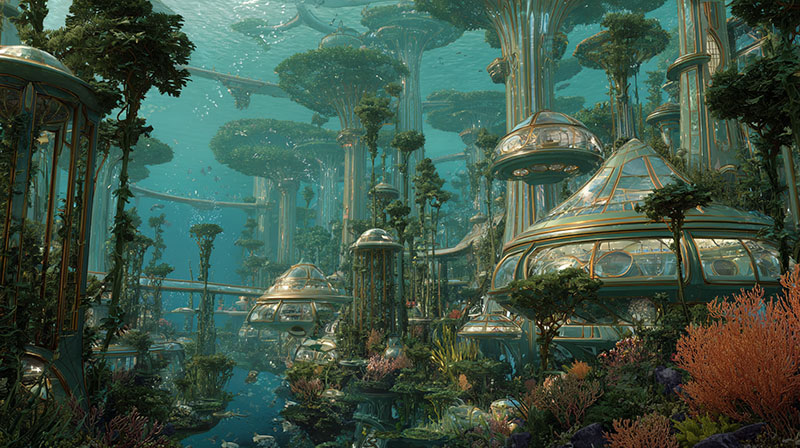
Subaquatic civilizations built beneath ocean surfaces. Architecture adapted for marine environments with pressure-resistant structures and bioluminescent lighting.
Key Visual Elements
- Domed structures protecting air-filled chambers
- Transparent viewing tunnels connecting districts
- Coral integration into building facades
- Kelp forests as natural barriers
- Submarine docking ports and transport tubes
- Bio-luminescent street lighting from engineered organisms
Color Palette & Atmosphere
Deep blues and teals dominate with distance creating darker gradients. Artificial lights in warm yellows and cool whites pierce the aquatic haze.
Shafts of surface light create volumetric god rays. Particle matter floats through water adding texture. The mood combines technological advancement with isolation.
Common Settings & Contexts
Post-apocalyptic narratives where surface became uninhabitable. Advanced civilizations choosing oceanic expansion over land.
Atlantis mythology influences many interpretations. Sci-fi explores resource extraction and research stations. Fantasy versions feature merfolk or water-breathing magic.
Artistic Techniques & Approaches
Atmospheric scattering intensifies with distance faster than air. Color temperature shifts cooler as depth increases.
Caustics on surfaces from wave refraction above. Motion blur suggests water current flow. Rendering volumetric lighting becomes crucial. Reference deep-sea photography for authentic color grading.
Sky Cities with Airships
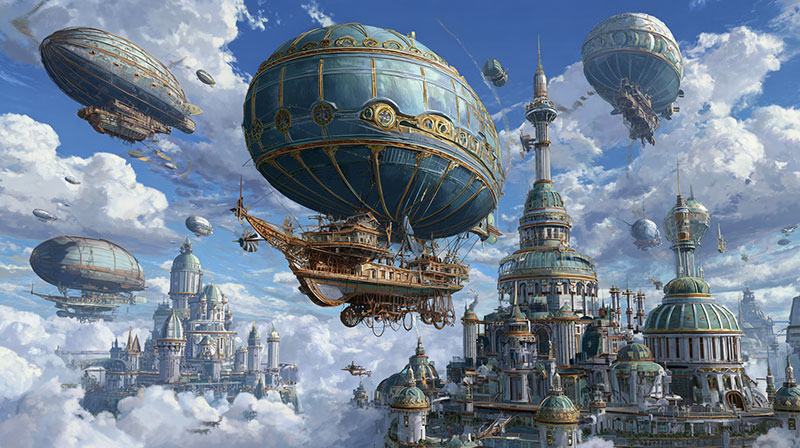
Metropolises built on elevated platforms or mountainous peaks. Airship traffic dominates transportation with docking towers and flight paths woven through architecture.
Key Visual Elements
- Multi-tiered platforms suspended at high altitudes
- Dirigibles, zeppelins, and propeller-driven vessels
- Docking spires with mooring lines and gangways
- Wind turbines and propulsion systems integrated into structures
- Brass and copper metalwork typical of steampunk aesthetics
- Cloud layers below or between city levels
Color Palette & Atmosphere
Brass golds, copper oranges, steel grays dominate metallic surfaces. Skies range from bright azure to sunset oranges and pinks.
Steam and smoke create atmospheric haze. Leather browns and canvas tans on airship envelopes. The mood feels industrious and adventurous with constant motion.
Common Settings & Contexts
Steampunk and dieselpunk genres favor these environments. Final Fantasy series showcases airship integration with cities.
Stories about trade routes, sky pirates, and aerial warfare thrive here. Cyberpunk aesthetic sometimes incorporates flying vehicle congestion in urban settings.
Artistic Techniques & Approaches
Forced perspective emphasizes vertical scale and height. Atmospheric haze increases with distance but less than water environments.
Mechanical details require understanding of industrial design. Motion lines suggest airship movement. Study Victorian and Art Nouveau architecture for period-appropriate styling. Understanding how to draw buildings helps with complex architectural structures.
Volcanic Wastelands with Lava Flows

Geologically active regions dominated by molten rock, ash fields, and pyroclastic formations. Extreme heat and toxic gases create hostile environments.
Key Visual Elements
- Rivers and pools of glowing molten lava
- Obsidian formations and volcanic glass shards
- Ash-covered terrain in blacks and grays
- Active volcanic cones ejecting material
- Geysers and fumaroles releasing steam
- Cracked earth revealing orange-red heat beneath
Color Palette & Atmosphere
Incandescent oranges, yellows, and reds from lava. Charcoal blacks and slate grays for cooled rock and ash.
Heat distortion warps distant views. Ember particles float through smoky air. The mood is oppressive and dangerous with extreme temperature variations.
Common Settings & Contexts
Fantasy often uses these as demon realms or cursed lands. Sci-fi places them on Venus-like planets or moons with active tectonics.
Video games favor them as high-difficulty zones. Lord of the Rings concept art depicts Mordor with volcanic wasteland characteristics. Stories about survival against nature or evil strongholds fit well.
Artistic Techniques & Approaches
Glow effects from lava require careful value control. Heat distortion creates wavy atmospheric effects.
Rim lighting on objects from ambient lava glow. Particle systems simulate ash and embers. Study how to draw fire for realistic flame and heat effects. High contrast between hot and cool areas creates drama.
Frozen Tundra with Ice Castles

Arctic environments featuring architectural marvels constructed from ice and snow. Sub-zero temperatures preserve crystalline structures year-round.
Key Visual Elements
- Fortresses carved from glacial ice
- Translucent walls refracting internal light
- Snow-covered terrain extending to horizons
- Aurora borealis illuminating night skies
- Icicle formations as decorative elements
- Frosted evergreen forests as borders
Color Palette & Atmosphere
Cool whites, pale blues, and icy cyan dominate. Aurora creates greens, purples, and occasional reds.
Shadows read as deep blue-violet rather than gray. Crystalline surfaces create sparkle and shimmer. The mood feels magical yet inhospitable with crisp, biting cold.
Common Settings & Contexts
Fairy tales place ice queens and winter kingdoms here. Fantasy novels use them for isolated realms or magical trials.
Frozen wastes test characters with survival challenges. Disney’s Frozen popularized the ice palace aesthetic. Stories about isolation, purity, or crystalline magic resonate.
Artistic Techniques & Approaches
Transparency and refraction require understanding crystal optics. Cool color temperature throughout with warm accent lights inside structures.
Reflective surfaces bounce light between ice planes. Subtle blue tints in shadows maintain cold atmosphere. Digital artists use ice brushes and crystalline textures. Study real glacial formations for structural accuracy.
Bioluminescent Alien Planets

Extraterrestrial worlds where life evolved to produce natural light. Flora and fauna emit various wavelengths creating ecosystems unlike Earth.
Key Visual Elements
- Trees and plants with glowing leaves, stems, or flowers
- Floating spores or seeds that emit light
- Bioluminescent creatures as primary light sources
- Rock formations with phosphorescent mineral deposits
- Water bodies glowing from microscopic organisms
- Alien atmospheric conditions (multiple moons, different sky colors)
Color Palette & Atmosphere
Purples, magentas, cyans, and acid greens dominate. Combinations impossible in Earth-based ecosystems create alien quality.
Dual or triple shadows from multiple light sources. Atmospheric thickness affects light scatter uniquely. The mood ranges from wonderous to unsettling depending on color choices.
Common Settings & Contexts
Sci-fi exploration narratives discovering new worlds. Avatar’s Pandora established visual language for this landscape type.
Video games like No Man’s Sky procedurally generate bioluminescent planets. Stories about first contact, xenobiology, or terraforming benefit from these settings.
Artistic Techniques & Approaches
Multiple colored light sources create complex lighting scenarios. Glow effects need variation to avoid monotony.
Alien plant anatomy should follow internal logic even if fantastical. Reference deep-sea bioluminescence for realistic glow behavior. Color harmony becomes tricky with non-natural palettes.
Ancient Ruins Overtaken by Jungle
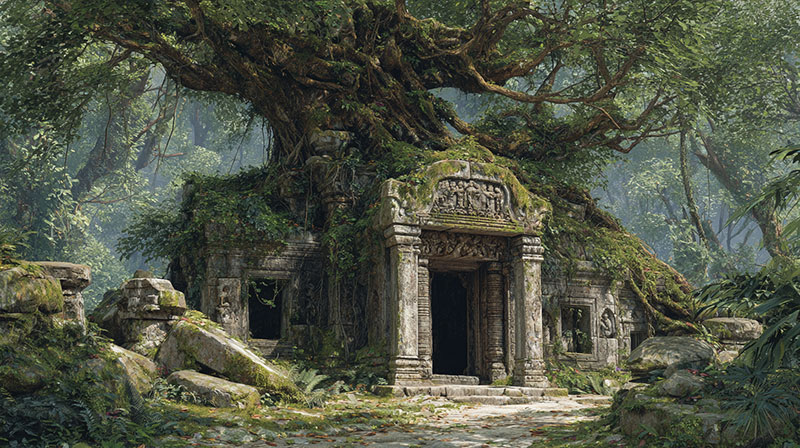
Abandoned civilizations reclaimed by aggressive vegetation. Stone structures partially collapsed with vines, roots, and trees growing through architecture.
Key Visual Elements
- Temple complexes with intricate stone carvings
- Massive tree roots breaking through walls and floors
- Vines draping across columns and doorways
- Moss and lichen covering stone surfaces
- Statuary partially buried or toppled
- Thick canopy creating dappled lighting
Color Palette & Atmosphere
Forest greens in countless variations dominate. Weathered stone in grays, tans, and browns provides contrast.
Shadows create deep pockets of near-black in dense foliage. Occasional shafts of sunlight pierce the canopy. Humid, oppressive atmosphere with visible moisture in air. The mood combines mystery with decay.
Common Settings & Contexts
Adventure narratives about lost civilizations (Mayan, Khmer influences common). Tomb Raider and Uncharted game series popularized the aesthetic.
Archaeological expeditions discovering forgotten knowledge. Fantasy settings where magic failed and nature reclaimed territory. Stories exploring impermanence and nature’s power work well.
Artistic Techniques & Approaches
Layering vegetation over architecture requires understanding both. Stone weathering patterns follow water flow and exposure.
Root systems wrap around and penetrate structures realistically. Light filtering through canopy creates complex shadow patterns. Learning to draw trees helps with varied jungle vegetation. Texture work distinguishes stone from organic growth.
Desert with Towering Rock Formations
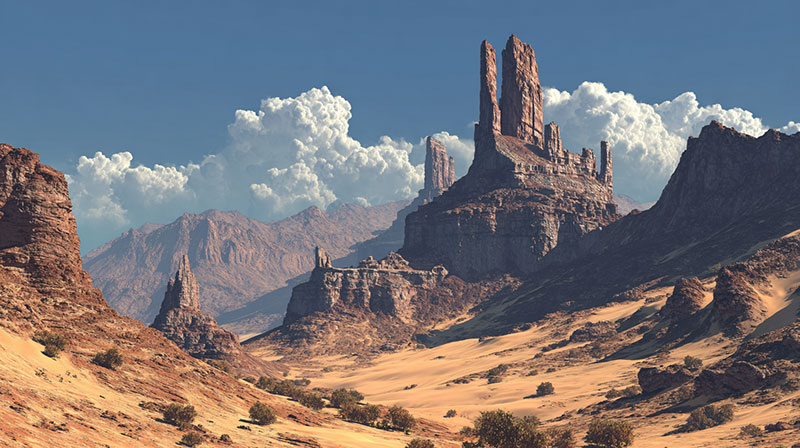
Arid landscapes dominated by massive stone pillars, mesas, and wind-carved geology. Sparse vegetation and extreme temperature ranges.
Key Visual Elements
- Sandstone spires and hoodoos reaching hundreds of feet
- Mesa plateaus with sheer cliff faces
- Sand dunes in foreground or middle ground
- Slot canyons with narrow passages
- Natural arches formed by erosion
- Sparse desert vegetation (cacti, scrub brush)
Color Palette & Atmosphere
Warm earth tones: terracotta reds, burnt oranges, sandy yellows. Rock strata create horizontal color bands.
Deep blue skies contrast with warm ground. Harsh sunlight creates strong shadows with crisp edges. Heat shimmer distorts distant views. The mood feels vast and lonely with sublime scale.
Common Settings & Contexts
Western and post-apocalyptic genres favor these. Fantasy worlds use them as trial grounds or sacred sites.
Monument Valley and American Southwest influence visual language. Stories about survival, spiritual journeys, or ancient mysteries fit naturally. Video games use them for open-world exploration zones.
Artistic Techniques & Approaches
Strong value contrast between sunlit and shadow areas. Atmospheric perspective subtle in dry air but present.
Geological stratification creates horizontal rhythm. Erosion patterns follow wind and water logic. Warm color temperature in direct light, cooler in shadows. Study real desert geology for believable formations.
Misty Mountain Peaks with Waterfalls
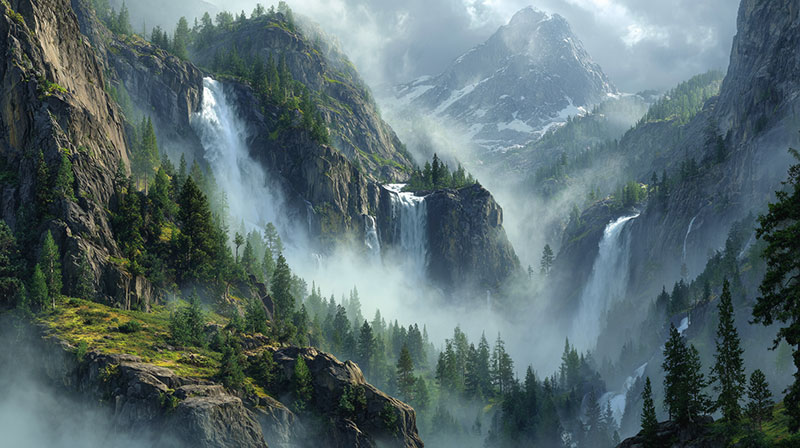
Alpine environments where mountains pierce cloud layers. Multiple waterfalls cascade down cliff faces creating constant mist and spray.
Key Visual Elements
- Mountain summits extending above cloud line
- Waterfalls in various sizes and stages
- Mist accumulating in valleys and gorges
- Rocky outcroppings and cliff faces
- Alpine meadows with wildflowers
- Pine forests on lower slopes
Color Palette & Atmosphere
Cool blues and greens dominate with gray stone. Mist creates value fades and atmospheric gradients.
Rainbow effects in waterfall spray when sunlight hits. Early morning or late afternoon light creates warm accents. The mood feels peaceful and majestic with constant water sounds.
Common Settings & Contexts
Asian-inspired fantasy settings (Chinese and Japanese influences). Martial arts narratives use them as training grounds.
Peaceful kingdoms or hidden monasteries occupy these regions. Games like Breath of the Wild feature extensive mountain climbing with waterfalls. Stories about meditation, discovery, or refuge work well.
Artistic Techniques & Approaches
Atmospheric perspective crucial with multiple depth layers. Mist creates soft edges and obscures details strategically.
Water movement requires understanding fluid dynamics. Reflective surfaces in pools at waterfall bases. Understanding how to draw clouds helps with mist and fog effects. Vertical composition emphasizes height.
Candy Land Environments
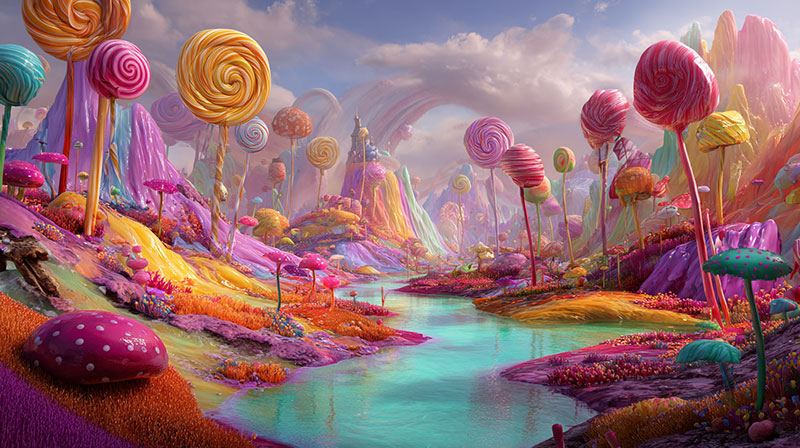
Whimsical landscapes where terrain and vegetation resemble confectionery. Saturated colors and fantastical proportions create surreal children’s book aesthetics.
Key Visual Elements
- Lollipop trees with spiral patterns
- Frosting-covered hills and mountains
- Candy cane forests or fence posts
- Chocolate rivers or caramel waterfalls
- Gingerbread house architecture
- Gumdrop bushes and rock formations
Color Palette & Atmosphere
Maximum saturation across entire spectrum. Pinks, purples, yellows, and reds in vibrant intensities.
High contrast with bright highlights. Everything appears edible and glossy. The mood is playful and childlike with dreamlike quality.
Common Settings & Contexts
Children’s entertainment and fantasy aimed at young audiences. Candyland board game established visual conventions.
Surreal narratives exploring consumerism or desire. Willy Wonka influences modern interpretations. Stories about temptation, innocence, or imagination fit naturally.
Artistic Techniques & Approaches
Texture work mimics confectionery surfaces (smooth fondant, crystalline sugar, glossy chocolate). Lighting creates appetizing appearance.
Proportions exaggerated for whimsical effect. Reflective highlights on glossy surfaces. Color harmony challenging with extreme saturation. Digital painting suits this style well.
Dark Forests with Twisted Trees

Sinister woodlands where trees grow in gnarled, threatening shapes. Low light conditions and oppressive atmosphere create Gothic horror settings.
Key Visual Elements
- Gnarled tree trunks with face-like formations
- Twisted branches reaching like skeletal arms
- Thick fog obscuring visibility
- Dead or dying vegetation mixed with living
- Minimal undergrowth in perpetual shadow
- Hanging moss or fungi adding texture
Color Palette & Atmosphere
Desaturated greens, browns, and grays. Deep shadows with minimal ambient light.
Occasional moonlight creating silver highlights. Muted earth tones throughout. The mood is ominous and claustrophobic with Gothic overtones.
Common Settings & Contexts
Horror and dark fantasy genres favor these environments. Fairy tales use them as dangerous wild spaces.
Cursed lands or sites of ancient tragedies. Video games employ them as spooky zones. Stories about fear, corruption, or surviving evil thrive here.
Artistic Techniques & Approaches
Low-key lighting creates dramatic shadows. Silhouettes suggest threatening shapes without detail.
Fog layers control depth perception. Exaggerate organic forms into unsettling shapes. Study tree anatomy then distort purposefully. Understanding shadow rendering creates proper depth despite low light.
Steampunk Floating Cities
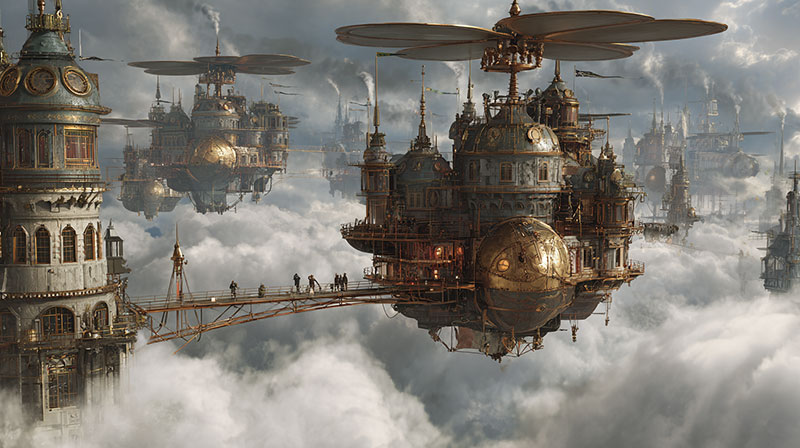
Victorian-era inspired metropolises suspended through brass machinery and steam power. Clockwork mechanisms and industrial design language dominate.
Key Visual Elements
- Massive propellers and rotor systems
- Exposed gear work and piston assemblies
- Brass plating and riveted metal construction
- Steam vents releasing pressure
- Observation decks and promenade platforms
- Clock towers and Victorian architecture
Color Palette & Atmosphere
Brass golds, copper oranges, iron grays, and bronze browns. Steam creates white atmospheric effects.
Patina greens on aged copper. Oil stains and rust add weathering. The mood combines industrial progress with Victorian elegance and constant motion.
Common Settings & Contexts
Steampunk genre by definition. Alternate history where steam power advanced beyond reality.
Stories about class divide (upper city dwellers vs. lower maintenance workers). Adventure narratives with sky pirates and inventors. Explores industrialization themes.
Artistic Techniques & Approaches
Mechanical design requires understanding real engineering principles then exaggerating them. Victorian architectural details add period authenticity.
Weathering and wear make structures believable. Steam effects require soft brushwork. Study clockwork mechanisms for gear placement logic. Vertical composition emphasizes flotation defiance.
Enchanted Valleys with Magical Rivers

Lush valleys where rivers possess supernatural properties. Glowing water, unusual flow patterns, or mystical creatures inhabiting waterways.
Key Visual Elements
- Rivers flowing with luminescent water
- Unusual colors (silver, gold, or rainbow hues)
- Floating objects or reversed gravity near water
- Magical creatures emerging from depths
- Vegetation growing more vibrant near rivers
- Waterfalls with impossible physics (flowing upward)
Color Palette & Atmosphere
Depends on magical water color but typically includes otherworldly hues. Surrounding landscape in natural greens contrasts with supernatural water.
Light emanates from river creating reverse lighting scenarios. Sparkling particles in air near water. The mood feels peaceful yet powerful with tangible magic.
Common Settings & Contexts
High fantasy settings with strong magical systems. Sacred sites where magic flows like water.
Healing springs or power sources for civilizations. Stories about magic’s source or mystical journeys. Fairy tale settings where wishes come true near water.
Artistic Techniques & Approaches
Water rendering with added luminescence or color shifts. Reflection and refraction still apply but with unnatural hues.
Particle effects suggest magical energy. Surrounding environment should react to magical influence. Study water flow then selectively break physics for effect.
Underground Temple Complexes
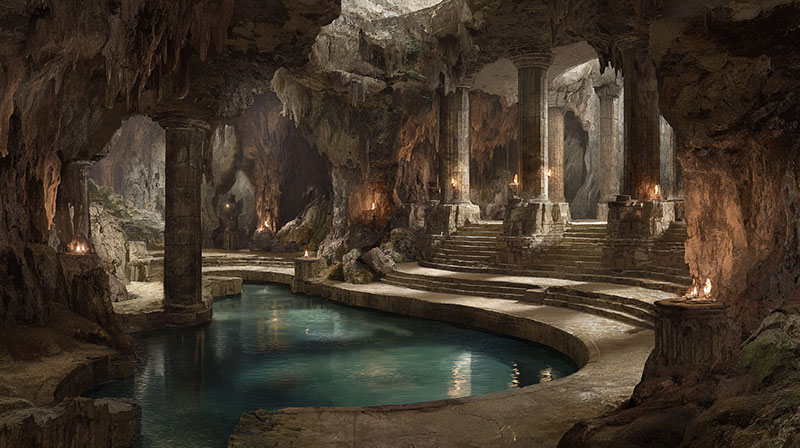
Subterranean religious or ceremonial structures carved into bedrock. Combination of natural cave systems with intentional architecture.
Key Visual Elements
- Carved pillars and support structures
- Bas-relief sculptures telling stories
- Altar spaces and ceremonial chambers
- Torch or brazier lighting creating dramatic shadows
- Natural rock formations integrated into design
- Underground water features or sacred pools
Color Palette & Atmosphere
Warm torch light (oranges and yellows) against cool stone (grays and blues). Limited color palette due to underground location.
Flickering light creates moving shadows. Smoke from fires adds atmospheric haze. The mood feels reverential and mysterious with acoustic resonance.
Common Settings & Contexts
Adventure narratives discovering lost religions. Fantasy quests for artifacts or knowledge.
Dwarf kingdoms in mountain hearts. Ancient civilizations with earth-based worship. Stories about hidden knowledge or forbidden rituals.
Artistic Techniques & Approaches
Torch lighting requires understanding point light sources. Stone carving details show craftsmanship and age.
Atmospheric perspective less relevant in enclosed spaces. Echo and acoustics inform spatial design. Reference actual historical temple complexes (Petra, Ellora Caves).
Celestial Gardens in the Clouds

Cultivated paradises existing in cloud layers. Carefully maintained flora in impossible aerial locations.
Key Visual Elements
- Manicured gardens on cloud-like platforms
- Flowering trees and exotic plants
- Marble pathways and classical architecture
- Fountains and water features defying gravity
- Divine or angelic figures as inhabitants
- Golden light suggesting heavenly realm
Color Palette & Atmosphere
Whites and golds dominate with pastel flower colors. Soft blues in sky and atmospheric elements.
Diffuse lighting creates ethereal glow. Everything appears pristine and perfect. The mood is serene and divine with peaceful tranquility.
Common Settings & Contexts
Religious or mythological settings depicting paradise or heaven. Fantasy realms where gods or celestial beings dwell.
Reward destinations after arduous journeys. Stories about afterlife, spiritual ascension, or divine intervention. Eastern and Western paradise concepts blend here.
Artistic Techniques & Approaches
Soft focus and diffusion create dreamy quality. High-key lighting minimizes shadows.
Classical garden design principles apply despite impossible location. Everything should feel light and airy. Avoid heavy visual weight in composition.
Dystopian Futuristic Cityscapes
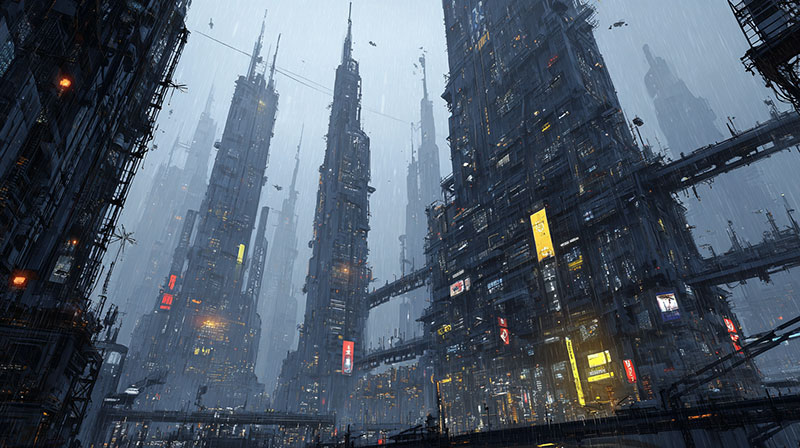
Overcrowded urban environments with extreme vertical development. Technology advanced but society deteriorated creating oppressive atmosphere.
Key Visual Elements
- Skyscrapers extending into smog layers
- Neon advertising covering buildings
- Flying vehicles creating traffic congestion
- Visible class divide in architecture quality
- Industrial infrastructure exposed
- Acid rain or polluted atmosphere
Color Palette & Atmosphere
Neon blues, pinks, and greens against dark buildings. Smog creates brownish or greenish atmospheric tint.
Artificial light dominates with minimal natural sunlight. Reflective wet surfaces from constant rain. The mood is oppressive and bleak with corporate domination.
Common Settings & Contexts
Cyberpunk aesthetic defines this landscape type. Blade Runner established visual language.
Stories about inequality, corporate control, or resistance movements. Technology advanced while humanity suffered. Noir detective stories or rebellion narratives.
Artistic Techniques & Approaches
High contrast between neon lights and dark spaces. Atmospheric scattering from pollution.
Vertical composition emphasizes scale and class division. Reflective surfaces everywhere from rain. Study Asian megacity photography (Tokyo, Hong Kong) for density reference.
Giant Tree Cities in Canopies

Civilizations built within or upon massive trees. Interconnected platforms and structures integrated with living wood.
Key Visual Elements
- Tree trunks hundreds of feet in diameter
- Platform systems at various canopy levels
- Bridges and walkways connecting different trees
- Structures built into tree hollows
- Rope systems and pulley elevators
- Bioluminescent fungi or fireflies as lighting
Color Palette & Atmosphere
Forest greens with wood browns. Dappled sunlight filtering through leaves above.
Cooler tones in shadow areas between platforms. Natural materials dominate color palette. The mood feels organic and peaceful with harmony between nature and civilization.
Common Settings & Contexts
Elven cities in fantasy settings. Avatar’s Hometree popularized the concept.
Eco-friendly civilizations refusing ground development. Post-apocalyptic scenarios where ground became uninhabitable. Stories about nature harmony or preservation.
Artistic Techniques & Approaches
Scale contrast between normal and giant trees creates impact. Organic shapes require different approach than geometric buildings.
Living wood grows around structures creating integration. Multiple light sources from various canopy openings. Study real tree anatomy then scale dramatically.
Moonlit Swamps with Glowing Plants
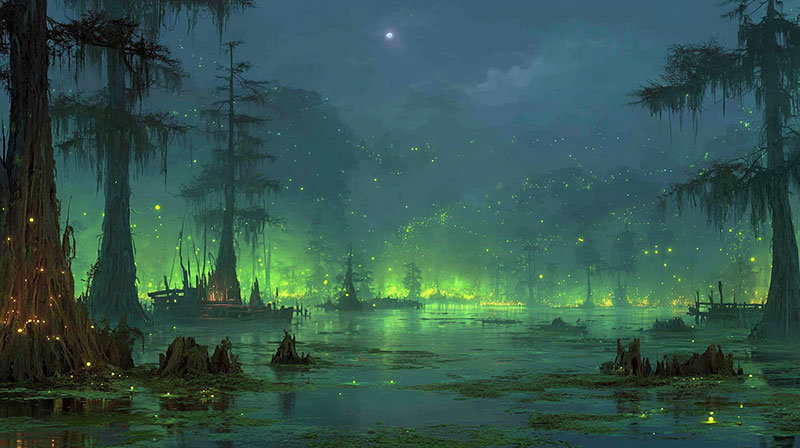
Wetland environments transformed by nocturnal illumination and bioluminescent vegetation. Water-saturated ground with supernatural ambiance.
Key Visual Elements
- Cypress or mangrove trees with visible roots
- Standing water reflecting moonlight
- Glowing marsh plants and algae
- Mist hovering over water surface
- Fireflies or glowing insects
- Abandoned structures slowly sinking
Color Palette & Atmosphere
Silver moonlight creates blue tints. Green and yellow bioluminescence from vegetation.
Deep blacks in shadow areas. Reflection doubling light sources in water. The mood is mysterious and slightly eerie with humid, heavy air.
Common Settings & Contexts
Southern Gothic and fantasy horror favor these. Witch or hermit dwellings hidden in swamps.
Mystical locations where reality thins. Video games use them as moody exploration zones. Stories about secrets, magic, or lurking dangers.
Artistic Techniques & Approaches
Reflections in still water create symmetry. Mist layers control depth and mystery.
Bioluminescence provides motivated light sources beyond moon. Water rendering with organic debris floating. Gnarled tree forms create sinister silhouettes.
FAQ on Fantasy Landscape Ideas
What software works best for creating fantasy landscape art?
Photoshop and Procreate dominate digital fantasy art. Blender handles 3D terrain generation while Krita offers free alternatives with excellent brush engines.
Unity and Unreal Engine excel at interactive environment design for game worlds.
How do I make floating islands look believable?
Apply atmospheric perspective by desaturating distant islands. Add exposed rock foundations with dangling vegetation underneath.
Waterfalls cascading into clouds below establish scale. Lighting from above creates rim highlights on island edges while shadows underneath add depth.
What color palette works for bioluminescent environments?
Cyan, turquoise, and jade create authentic bioluminescence at 520-530 nanometer wavelengths. Paint on dark backgrounds so luminescence reads clearly.
Add cool blue undertones in shadow areas. Reference real glowing fungi like Mycena chlorophos for natural color accuracy.
How do I create depth in crystal cave scenes?
Layer transparency with multiple light passes simulating internal reflections. Cool blues dominate water while warm earth tones appear in surrounding stone.
Caustics (light patterns through crystal) add realism. Hard-edged geometry contrasts with organic cave structures for visual interest.
What makes underwater cities visually convincing?
Atmospheric scattering intensifies faster than air environments. Color temperature shifts cooler with depth while particle matter floats through water adding texture.
Volumetric god rays from surface light create drama. Caustics on surfaces from wave refraction above establish aquatic environment authenticity.
How do I incorporate airships into sky city designs?
Study Victorian and Art Nouveau architecture for period styling. Brass metalwork, copper plating, and exposed gear systems define steampunk aesthetics.
Docking spires with mooring lines integrate vessels into city infrastructure. Motion blur and steam trails suggest constant aerial traffic movement.
What artistic techniques enhance volcanic wasteland scenes?
High contrast between incandescent lava (oranges, yellows) and cooled rock (charcoal blacks). Heat distortion warps distant views through smoky air.
Rim lighting on objects from ambient lava glow creates drama. Study how fire behaves for realistic flame and molten rock rendering.
How do I paint convincing magical rivers?
Water physics still apply but with supernatural color shifts. Luminescent water creates reverse lighting scenarios on surrounding terrain.
Particle effects suggest magical energy dispersal. Reflections and refraction rules remain valid despite unnatural hues like silver, gold, or rainbow tones.
What makes ancient jungle ruins look authentic?
Weathering patterns follow water flow and sun exposure logic. Massive tree roots should realistically wrap around and penetrate stone structures.
Moss and lichen coverage varies by moisture and light conditions. Reference Angkor Wat and Mayan temples for accurate stone carving deterioration patterns.
How do I design alien planet ecosystems?
Multiple colored light sources create complex shadow scenarios. Bioluminescent flora should follow internal biological logic even when fantastical.
Study deep-sea organisms for realistic glow behavior. Color harmony becomes challenging with non-terrestrial palettes requiring careful temperature balance throughout compositions.
Conclusion
Fantasy landscape ideas evolve from understanding both technical fundamentals and creative vision. Atmospheric perspective, color theory, and lighting principles apply universally across all terrain types.
Your worldbuilding success depends on internal consistency. Crystal caves need geological logic while bioluminescent forests require biological reasoning, even when breaking physical laws.
Start with simplified compositions before adding complexity. Master one environment concept thoroughly rather than attempting twenty mediocrely.
Digital tools from Procreate to Blender accelerate the creative process, but traditional skills in value control and composition remain foundational. Study real-world references then push beyond natural limitations.
The difference between generic backdrops and memorable settings lies in specific details. Exposed root systems on floating islands, heat distortion in volcanic wastelands, caustics in underwater cities.
These visual signatures transform concept art into immersive worlds worth exploring.

- How to Draw an Ear: Tips Every Artist Needs to Know - May 28, 2026
- Fantasy Landscape Ideas to Spark Your Imagination - September 29, 2025
- Awesome examples of World of Warcraft concept art - February 10, 2025